
Key Highlights
- The metaverse leverages virtual reality and immersive environments to make 24/7 education accessible for India’s night-shift workers and gig professionals.
- Metaverse platforms move beyond traditional e-learning, offering interactive digital classrooms and personalized learning experiences through artificial intelligence.
- Night-time learners benefit from flexible scheduling, real-time collaboration, and practical skill development in virtual spaces.
- Indian and international institutions are piloting metaverse-driven education, especially in STEM, language, and creative fields.
Introduction
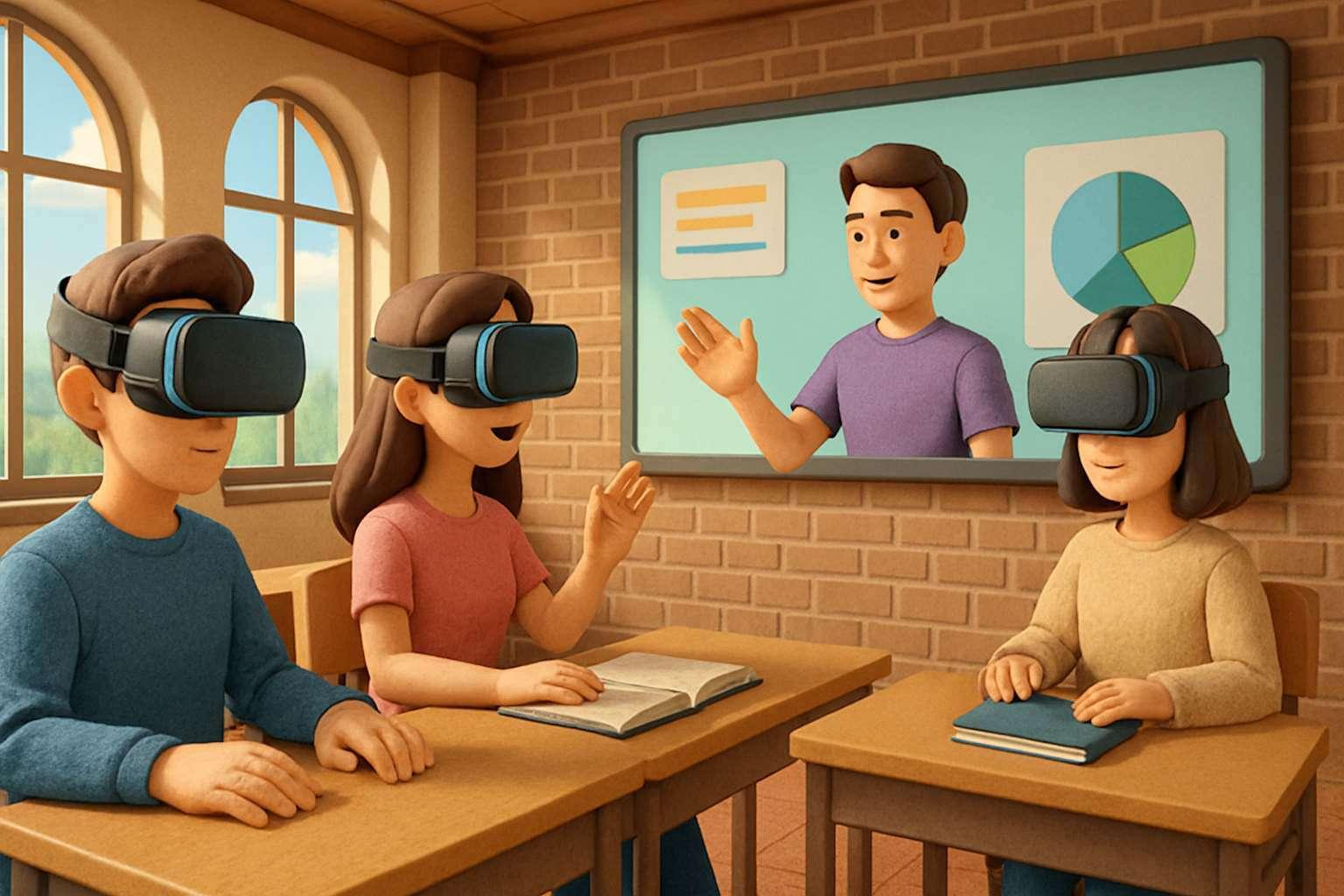
Virtual reality is changing how students absorb school material, especially beyond regular school hours. It offers immersive experiences that benefit learners who cannot attend classes during the day. Metaverse in education takes this further by creating interactive, 3D learning spaces that feel real and engaging. Through metaverse school & classrooms, students can attend virtual lectures, collaborate with peers, and explore subject matter as if they were physically present — even if they are miles away.
These virtual environments are especially valuable for people who do not follow the usual learning paths. In India, many night-shift workers and gig workers want flexible learning opportunities that fit their schedules. The metaverse can make this possible by enabling learning at any time, from anywhere, while fostering inclusivity and personal choice.
Understanding the Metaverse as an Educational Platform
Metaverse technologies bring together virtual reality, artificial intelligence, and interactive places that are part of the metaverse to change how people learn. These tools go beyond basic online classrooms. They create virtual worlds. In these worlds, students and teachers can meet and work with each other in real time. The educational settings inside the metaverse are highly flexible and keep people interested. This is good for those who have work or other things to do at different times of the day.
What does it mean to use the metaverse in education, and how is it not the same as the old way of learning online or other virtual classrooms? Let’s talk about the main points and see what makes the metaverse good for people who learn after hours.
What Is the Metaverse and How Does It Differ from Virtual Classrooms?
The metaverse is a group of connected virtual worlds, often inspired by gaming experiences like World of Warcraft, that you can use by digital devices and VR headsets. It is not the same as usual virtual classrooms. Those just copy normal teaching in a digital way. But in the metaverse, you get a whole new reality for learning. You are not just sitting in a lecture. You are inside a space with virtual objects, where everything feels real, and you can talk and act with others at the same time.
In regular virtual classrooms, there are things like video calls and files everyone can share. But you still feel like you are in the physical world. The metaverse takes that feeling away. It gives students places where they can look around, try things out, and work together. It almost feels like all of you are in the same place, even if you are far apart. Metaverse in education is not just about remote learning. It is about turning it into fully immersive learning experiences. Now, the digital side and the physical world mix together for educational purposes.
What does this change mean for after-hours learners in India? It is about being flexible, keeping students interested, and letting them practice real-life things no matter the time or where they are.
Core Technologies Enabling Metaverse-Based Learning Environments
A strong metaverse classroom needs different new technologies to work together. Virtual reality headsets let students step into three-dimensional worlds. The Internet of Things helps connect devices, making it easy to share data. Artificial intelligence helps with the learning process by making the educational content fit each student’s needs and progress.
Mobile devices are also important. They let people get into the classroom even if they do not have big or costly computers. But are all these technologies easy for most schools to use? Right now, VR headsets and Internet of Things sensors are dropping in price. For these things to be used everywhere, there needs to be better internet, more teacher training, and more money spent by schools. Schools need to look at the up-front cost and also think about the good and useful things they will get in the long run with this new way to learn.
After school hours, using all these tools means the learning process can keep going. The metaverse makes it possible for education and group work to happen at any time and from any place. This brings more real-world value and gives learners the time and space that fits their lives.
Evolution of E-Learning to Immersive Metaverse Experiences
Remote learning started with video lectures and text, giving students more freedom with their time. But, this kind of learning did not let them feel really involved. Virtual environments soon brought in VR and AR. These tools gave students a chance to use interactive simulations. That made the educational content better and also helped people remember it.
Immersive experiences in the metaverse go beyond this. Students are not just watching. They take part in the activity, doing things in real time. They might work with other students, solve problems, or run experiments. So, the change from old ways to these new learning environments is important, especially for non-traditional learners.
When you look at using VR in education against the idea of the metaverse, you see some differences. VR and AR improve the standard remote learning in their own ways while maintaining a connection to physical reality. But, the metaverse mixes these virtual environments with social contact. It lets students follow their own learning path, making the whole learning experience better. For students in India who study after regular hours, these immersive experiences help them more than ever before.
After-Hours Learners in India: Context and Needs
India has many people who work at night or take up gig jobs. Their hours do not match regular school times. After work, learners often cannot go to in-person classes, so they turn to distance learning. But this way of learning is not very engaging, and often, it does not seem useful for their needs.
These non-traditional learners want flexible learning environments. The solutions need to be easy for them to use so they can fit study into their daily schedules. Metaverse technologies can help here. With the metaverse, students can join in immersive learning environments at any time of the day or night. But people wonder, which subjects work best with this kind of distance learning? And what problems are there to solve before it can work well for everyone?
The Landscape of Night-Shift and Gig Work in India
Many people across India now do night-shift jobs or work in gig roles thanks to the 21st-century economy. They might be at call centers or work in delivery. Most of them work outside regular hours. This means they do not have much chance for daytime education. These workers need educational experiences that fit the real world and work well with their busy schedules.
Metaverse classrooms offer special help for after-hours learners. Students can log in late at night, work on group tasks, and use learning resources the way that suits them best. The real time way these classrooms work lets students join no matter where they are or when they work. So, no one gets left behind.
What benefits does the metaverse give to India’s after-hours learners? The biggest things are flexibility, group work, and practical skills that do not get in the way of jobs. The metaverse fits the needs of this new and changing workforce and gives all people better ways to learn in real time.
Education Barriers for Non-Traditional Learners
Non-traditional learners find it hard to keep up when schedules are strict. They also can’t always get to educational institutions. Old teaching methods do not fit well in the digital age. Distance learning helps a bit, but it does not give enough ways for people to interact or practice hands-on skills.
Metaverse classrooms come in to break down these barriers in education. They let students have different learning environments that you can shape for their needs. There are interactive things to do, group work with others, and more freedom than you get in a regular school room. Students can dive into group tasks, look at virtual objects, and get teaching that is made just for them at a time that works best for them.
What are the main good points and hard parts of adding the metaverse to educational settings? Some of the best things are how it can make learning more open to all, get people involved, and change to fit many needs. For problems, there is getting people the right technology, training teachers, and keeping digital information safe. Still, there is no doubt that this could bring a big change to education.
Unique Challenges Faced by After-Hours Students
Night-shift workers and people who do gig jobs often feel tired from using digital tools so much. They try to manage work, family, and the learning process late at night. Many people who learn in a non-traditional way feel alone. They do not get enough support, and that can slow down how they learn. Metaverse classrooms help with some of these problems, but they also bring new things to think about.
Teachers have to know about the risks. With more screen time, there may be burnout and even less interest in learning. To keep students healthy and help the learning process, classrooms need good design and strong support from teachers. Before using metaverse technology in class, teachers should think about things like data privacy, treating students fairly, and making sure that everything in the classroom is easy to use for everyone.
The metaverse can help students who must learn after hours. Still, teachers must use it the right way. This helps make sure students have good learning experiences and avoid problems they did not expect.
Building Metaverse School and Classrooms: Features and Frameworks
Making strong metaverse classrooms needs more than new tech. It’s about good planning, making sure all students can join in, and getting support from educational institutions. When there is good design and the right tools, students can have fun and immersive experiences. The classroom fits students’ lives and helps them learn in new ways.
It’s important to think about what tech is needed and if most schools have the money for it. To help all students do well, educators should know the main parts and focus on making these spaces open to everyone. This way, the metaverse classroom helps every student to get what they need to learn.
Let’s take a look, step by step, at how to set up a strong metaverse classroom.
Essential Components of a Metaverse Classroom
A metaverse classroom uses new technology, interactive software, and exciting learning environments. The VR headsets take students to different virtual worlds. The digital objects and real-life scenarios in these worlds help students to explore and learn by doing things with their own hands. Artificial intelligence changes the lesson content, so each learner gets what fits their ability level best.
Key components include:
- VR headsets and mobile devices for student access
- Interactive virtual objects and environments
- Real-time collaboration tools for group work
- Secure data management systems
- Adaptive content delivery powered by AI
How can the metaverse help make classroom learning in education better? When you use features like group work, artificial intelligence, vr headsets, virtual objects, mobile devices, and new learning environments, you get a place where students are more involved. It helps them get support and lets everyone learn by doing. With the metaverse, teaching moves away from just telling students what to do. It makes every lesson something students can join in, remember, and learn from, wherever they are.
Accessibility and Interactivity for Flexible Schedules
Accessibility is very important for night-shift employees and gig workers. Metaverse classrooms let people join in at any time, day or night. By using mobile devices, students can log in from anywhere they are. This is good for people who do not have high-end computers, as it makes it easier for them to join the class.
Another key part of these classes is interactivity. Things like group work, real-time social interactions, and team projects help students stay connected and feel part of something, even during late hours. Adaptive learning systems change the lessons to match each student’s pace and way of learning. These systems also look at the student’s progress and how they like to learn.
So, how can the metaverse support personalized or adaptive learning for students? The mix of accessibility and interactivity lets education fit in with work, family, or other things the student does. This gives students more control over how, when, and what they learn. Because of this, they can get new skills and knowledge in their own way and in their own time.
Security, Privacy, and Data Protection in Virtual Schooling
As more people use digital learning, there is a need to focus on security, privacy, and data protection. In metaverse classrooms, there is a large amount of sensitive digital information. So, there must be strong systems to keep student data safe. Schools have to follow rules and use safe platforms that help protect personal details.
Teachers should know about risks such as people getting in without permission, leaks of information, and the wrong use of digital information. Clear rules, regular checks, and safe, encrypted messages help build trust and keep everyone safe.
What risks or problems should teachers think about before using metaverse technologies in the classroom? Besides tech issues, they must also think about doing the right thing, like making sure students agree to join, being open, and caring about student welfare. The right way to use metaverse technologies will help decide if they will work well in teaching over time.
Real-World Examples of Metaverse Integration in Education
Metaverse technologies are now playing a big role in educational experiences at schools and universities all over the world. Some case studies from Indian schools and colleges show that students now get to use immersive environments in both higher education and some job training courses, highlighting the applications of metaverse in modern learning. There are also global examples that show how virtual campuses and nighttime learning help students in new ways.
When educational institutions choose to work with edtech companies and start using new technologies, they raise the bar for what learning can look like in the future. Are there real-world examples of using virtual reality and metaverse technologies in schools or universities? Yes, there are, and we can look at these detailed case studies next.
Case Studies from Indian Universities and Institutions
Several Indian universities have begun integrating metaverse technologies into their curricula, particularly in STEM and business education. These case studies demonstrate the practical applications and benefits of immersive learning environments.
These examples show that metaverse classrooms can provide hands-on experiences, real-time collaboration, and flexible learning for after-hours students.
International Success Stories with Nighttime Learning Models
Around the world, some universities like Esade and the Berlin School of Business and Innovation (BSBI) have started new ways to learn at night. They use virtual campuses for this. Esade’s campus in the metaverse is set up for people who work. It gives lessons, lets people talk in groups, and there are fun things to do too. All this happens online.
BSBI runs a four-week program called “Metaverse Revolution.” The program shows that learning can go on at any time. People can join a session late at night or early in the morning. For language learning and working on communication skills, they use platforms like Mondly VR and Bodyswaps. With these, people can try out new things and practice, with no real-world risks.
Industry Partnerships and EdTech Investments
Edtech companies and industry partnerships have a big role in moving metaverse education forward. When a university works with a tech company, they can build custom VR content, give safe platforms, and make adaptive learning better.
The main benefits of having the metaverse in educational settings come from these partnerships. They help solve both technical and money problems. But institutions should still watch out for things like privacy, training, and making sure technology gets used the right way. More investment now will help the future of metaverse-driven education in India and other places.
Subject Areas Best Suited for Metaverse-Based Learning
Not every subject gets the same help from metaverse-based learning. Fields like STEM, language learning, and the creative arts do well in virtual environments. The educational content for these subjects often needs hands-on practice and teaching that can change as you go. That is why immersive experiences really work for them.
Are there subjects or fields of study that get the most from metaverse-based learning? Let’s look at which areas see the biggest gains from this new way to teach, starting with STEM and hands-on job fields.
STEM and Vocational Fields
Science, technology, engineering, and mathematics (STEM) lead the way when it comes to using the metaverse in learning. The metaverse brings things like virtual labs, simulations, and engineering projects to students who cannot be in real classrooms. For those in vocational training, there are hands-on workshops and chances to learn real skills in safe, online spaces.
The future of education in these fields is all about practical learning and teamwork. The metaverse makes this easy. It lets students practice skills, do experiments, and work through problems with help from smart AI teachers.
Are there certain subjects that gain the most from learning in the metaverse? STEM and job-based fields really stand out here. They are great for people who learn after normal hours and want a way to move ahead in their jobs, but still want good, active learning.
Language and Communication Courses
Language learning and communication skills work well in a virtual space. Platforms like Mondly VR let people practice language skills with avatars and speech recognition. You get to talk and take part in everyday conversations. Real-time feedback and AI-powered chatbots help people build confidence and fluency.
Communication courses use virtual environments, too. They help you practice public speaking, negotiation, and teamwork. Working professionals can join these sessions at times that work best for them. The flexible schedules make virtual space a good fit for busy people.
Creative Arts, Design, and Humanities
Creative arts, design, and humanities get better when students are in immersive experiences. Virtual studios, galleries, and design spaces let students try out new things, work with others, and show their work. The metaverse sparks imagination and helps students think deeper, making projects that can go further than what is possible in real classrooms.
Humanities courses use virtual tours and role-play to help make subjects like history, literature, and philosophy more real. Students get to work with digital objects, see things in new ways, and talk with others in groups.
Are there subjects or areas that get the most from metaverse-based learning? The arts and humanities gain a lot from the creativity, freedom, and social time that metaverse classrooms bring. This is even more helpful for people who want to learn after hours.
Benefits of Metaverse Classrooms for After-Hours Learners
Metaverse classrooms give a lot of help to India’s after-hours learners. They help people remember the things they learn better. Everyone can get to the classes anytime, and it is easy for people to work with others, too. The flexible time lets students choose when to study, so anyone can go in and learn, day or night. The group work feature makes people talk to each other, and that helps all to be part of a group.
Being with others in these online spaces makes learning fun and keeps people wanting to come back. Group work also helps people get to know each other who have jobs during the day. So, what makes these metaverse classrooms good for India’s after-hours learners is the way they give more time, make people want to take part, and let people get together. This is changing how non-traditional students learn now.
Flexibility and Accessibility Beyond Traditional School Hours
Flexible scheduling really changes the way we see distance learning. In metaverse classrooms, you can log in and join the class when you want. This could be before your work, after your shift, or during any break you have. Mobile devices and cheap VR tools help make this even easier for many people.
Distance learning in the metaverse means you do not have to be there in person. It makes things much easier for those who work at night or have different jobs. Educational resources and tools are always there for you, giving support all the time.
What are the main advantages of using metaverse classrooms for after-hours learners in India? Flexibility and being easy to reach mean every learner, no matter their time or where they are, gets a real chance to do well.
Increased Engagement for Working Professionals
Engagement is key to intrinsic motivation, especially for people who are working and have many things to do. Immersive experiences in the metaverse give interactive content, real-time feedback, and chances for group work. These features help keep learners interested and involved.
When there is more engagement, people remember more and learn new skills better. This helps with their work growth and personal progress. Metaverse platforms can also change the content to fit the professional needs and interests of each person.
What are the main advantages of using metaverse classrooms for after-hours learners in India? By boosting engagement, the metaverse turns passive learners into active participants. This makes education more meaningful and helpful.
Networking Opportunities in Virtual Spaces
Networking is one big advantage of virtual environments. Students who learn after hours can meet with other students, teachers, or people from different companies. They can connect with others from all over the country and around the world. This can happen through social interactions, group work, and working together on projects. All these things help make good relationships and help everyone learn at work.
Virtual spaces also let people who work full time to grow their group of contacts. They do not have to worry about the time or where they are. When people take part in metaverse classrooms, they get a feeling of being with others. This helps students not feel alone and stay eager to learn.
One of the main advantages for after-hours learners in India is better networking. Virtual environments let them find new chances, work with others, and keep learning for life, thanks to social interactions.
Conclusion
The potential of the metaverse to change education is huge. It brings new and immersive learning experiences that can replace traditional methods. With virtual environments and new technologies, educational institutions can make educational experiences more engaging. This helps students keep what they learn in their minds longer. It also can help people get better at communication skills. As we live in this digital age, it is important to make sure students and teachers are ready for this big change. We all need to get ready for the future of learning. By using more virtual content and focusing on real-time social interactions, we will see new and better educational settings. This will make the learning process better for everyone.
Frequently Asked Questions
What are the main advantages of using metaverse classrooms for after-hours learners in India?
Metaverse classrooms give people in India a way to learn that is flexible. You can join classes after normal hours and from any place. They also help you get into immersive experiences that make learning more fun. Students get to work together and talk more. It helps everyone stay interested. Metaverse classrooms also let you learn at your own speed with lessons and tools made just for you. This helps students who all have different ways to learn.
Are metaverse technologies accessible to most schools and learners today?
Access to metaverse technologies is very different in schools. It depends on things like the infrastructure, the money, and the training they have. Some schools use metaverse technologies and want these new ideas. But many do not have enough resources, or the students do not know how to use digital tools. This makes it hard for everyone to take part and slows down how fast metaverse technologies can be used widely.
What should educators know before integrating metaverse platforms into their teaching?
Educators need to know the different features and tools of metaverse platforms. They should have the right skills to guide people in these online spaces. It is important that students are ready to be part of digital worlds. Also, teachers must know rules about safe ways to join these platforms. All these steps help to make the learning experience better for everyone.