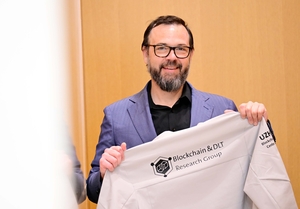

University of Zurich’s Claudio Tessone says future of crypto depends on economic design, education, integration
The blockchain industry, once driven by speculative manias and technological zeal, is entering a more sober phase. From Switzerland’s Crypto Valley to Seoul’s policy committees, regulators and developers are converging on one conclusion: Blockchain’s future will depend less on code than on the systems of trust, incentives and education behind it.
“Blockchain systems are socioeconomic in nature,” said Claudio J. Tessone, a professor of blockchain and distributed ledger technologies at the University of Zurich, during a recent interview with The Korea Herald in Seoul. “Designing them is not just about coding protocols — it’s about managing a socioeconomic system, adjusting its rules and evolving with how people use it.”
Tessone, who leads the university’s Blockchain Center and advises networks such as Cardano and Polkadot, argues that the industry’s deepest flaw is economic, not technical. “We still don’t know how to design proper incentives,” he said. “That’s why concentration of wealth and power keeps reemerging, even in systems meant to decentralize it.”
Rethinking decentralization
After more than a decade of experimentation, Tessone says the industry must face a hard truth: Decentralization has largely failed. “The most-used blockchains are centralized by construction, and users tolerate it — just as they tolerate inequality in traditional finance,” he said.
The problem, he argues, is not the technology, but its socioeconomic design. “Blockchain can decentralize trust, but most systems have poorly designed incentives, which lead to power concentration.”
He likens blockchain governance to managing a small economy. “Designers should see blockchains as socioeconomic systems and adapt rules to how people use them — like societies do, enabling healthier evolution.”
One path forward, Tessone said, lies in tools that bridge digital and real economies. Stablecoins, for instance, offer a pragmatic link between blockchain and finance. “I’m from Argentina, a country plagued by inflation for decades,” he said. “For many people, saving in foreign currencies and accessing them is crucial to protect savings. Blockchains enable this and allow instant remittances.”
While stablecoins can boost efficiency, he warned that widespread use could weaken fragile currencies. “If everyone shifts to dollars or euros, some countries may lose monetary autonomy.”
For Korea, which is exploring a won-based stablecoin, he suggested prioritizing payments and circulation over savings. “It doesn’t need massive supply — just constant movement.”
Smart regulation, smarter education
Switzerland’s path shows how long-term vision, rather than speculative fervor, can nurture a stable blockchain ecosystem. Zug, south of Zurich, became the heart of Crypto Valley in 2014, when local authorities allowed foundations to manage crypto assets — a legal experiment that soon drew pioneers like Ethereum’s founders.
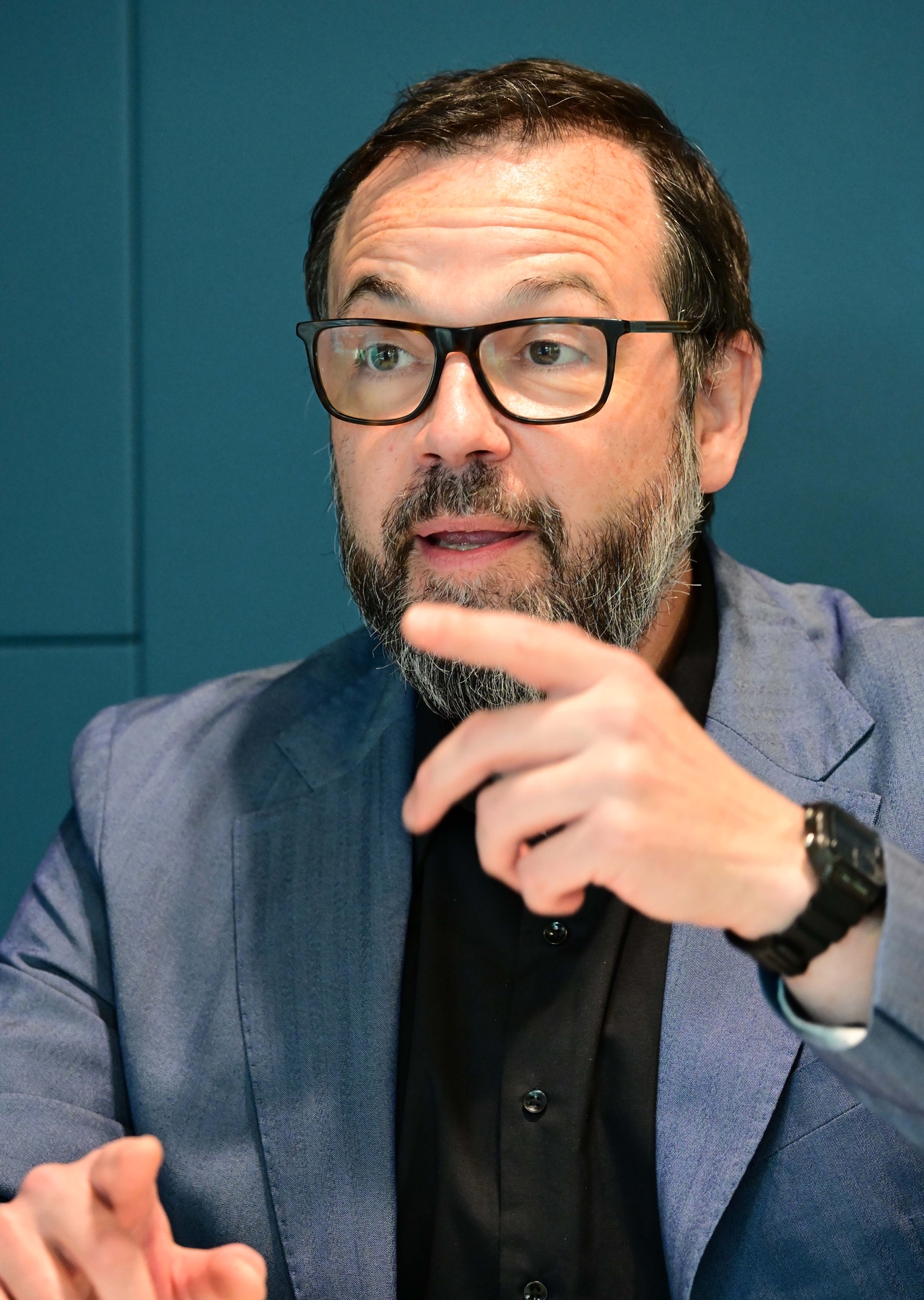
“Switzerland already had people from the financial industry who believed in blockchain’s vision,” Tessone recalled. “The combination of a lean regulatory framework, financial expertise and strong capabilities in fields like computer science made it a natural breeding ground.”
That foundation helped Switzerland stay resilient through boom-and-bust cycles, including the 2018 ICO crash. Today, it remains one of the world’s most structured blockchain hubs, with more than 1,500 firms in Zug and a regulated environment where even public banks offer crypto products and taxes can be paid in bitcoin.
For Tessone, blockchain’s next stage is not about chasing price cycles, but building systems that last. “Full decentralization may not be achievable — and that’s not necessarily bad. Some structure improves performance,” he said. “We need smart integration of regulation and innovation to make them work.”
Yet he believes rules alone are not enough. Blockchains enable complex financial products that few users truly understand, yet that are easier for providers to launch, Tessone warned.
“Without understanding, blockchain becomes a black box — like a slot machine. An investing in ‘next blockchains’ with untested, poorly understood mechanisms has fueled bubbles,” he said. “Financial education is essential to prevent people from falling for fraudulent schemes.”
Korea’s crossroads: From speculation to structure
For Korea, Tessone sees both caution and promise. The country is “highly digitalized” yet lags its potential due to harsh policy reactions, scams and the lingering shadow of the terra-luna collapse.
“The infrastructure and know-how exist,” he said. “What’s missing is a clear link between public blockchains and Korea’s strong IoT (internet of things) and electronics industries.”
Regulators are now working to rebuild credibility through the Digital Asset Basic Act, a comprehensive framework to define legal boundaries and investor protections. Korea has also debated introducing a bitcoin spot exchange-traded fund, though progress has been slower than in the US, where regulators recently approved altcoin-based spot exchange-traded funds.
Tessone believes Korea’s real opportunity lies in connecting its strength in electronics and autonomous devices with public blockchain networks.
“If solutions rely on private blockchains, the added value is small,” he said. “By linking physical infrastructure and on-chain systems, Korea could enable transparent micropayments and automated transactions.”
jwc@heraldcorp.com