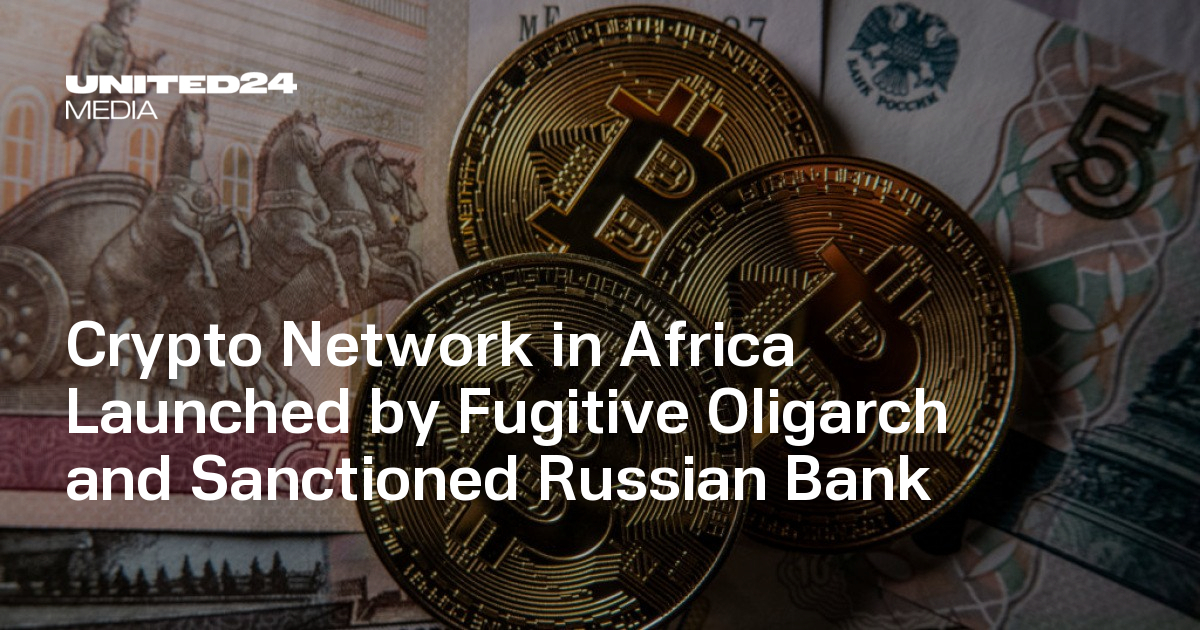

A Russian cryptocurrency network, run by a sanctioned state defense bank and a fugitive oligarch, is expanding its operations across Africa in a bid to bypass Western financial sanctions, Financial Times (FT) reported on April 6.
The network, named A7, was founded in 2024 by fugitive Moldovan oligarch Ilan Șor and the Russian defense-sector lender Promsvyazbank (PSB). Both are currently under Western sanctions.
We bring you stories from the ground. Your support keeps our team in the field.
DONATE NOW
The company recently posted a vacancy for a project manager to build a business “from scratch” in Togo, adding to its newly announced branches in Nigeria and Zimbabwe. The expansion is the latest sign that Moscow is seeking to build an alternative payments system insulated from the US dollar after its major banks were cut off from the SWIFT interbank messaging system following the full-scale invasion of Ukraine in 2022.
While it remains unclear whether A7 has handled any actual operations at these new African offices, the effort aligns with Russia’s strategy to adapt to global financial restrictions, according to FT.
Using creative methods like stablecoins and promissory notes, the network aims to keep rubles flowing internationally. In promotional materials, A7 claims to handle up to 19 percent of Russia’s foreign trade transactions, though these figures are impossible to verify independently.
The move into Africa closely tracks with Moscow’s expanding political and military influence across the continent. Following a string of military coups, Russia has strengthened its presence in the Sahel region and Madagascar, deploying military instructors from the defense ministry’s Africa Corps and signing new military cooperation agreements, such as a recent pact with Togo’s longtime leader Faure Gnassingbé.
Read more
- Category
- Anti-Fake
The Kremlin’s influence in Africa is largely enforced through the Africa Corps, a Russian Ministry of Defense entity that absorbed the operations of the notorious Wagner Group mercenaries. Operating in unstable nations like Mali and the Central African Republic, the Africa Corps provides regime security and military support in exchange for lucrative resource concessions and direct cash payments.
However, the group has inherited Wagner’s bloody legacy of severe human rights violations. According to investigations and refugee testimonies, Russian mercenaries operating under this new banner have continued a brutal pattern of terror—including arbitrary arrests, severe torture like waterboarding, and extrajudicial executions of civilians—to suppress local opposition and secure Moscow’s strategic and financial foothold on the continent.
Experts suggest that A7 and its backers may be attempting to integrate this financial operation into the Kremlin’s larger strategic machine in Africa, FT wrote.
During a Russia-Africa conference in Cairo in December 2025, Russian Foreign Minister Sergei Lavrov promoted A7 as Russia’s “first international financial platform” and urged African partners to join. Lavrov claimed that 84 percent of Russia’s trade with African countries between January and September 2025 was conducted in rubles.
Read more
- Category
- World
The expansion of the A7 cryptocurrency network highlights a growing trend: Russia is increasingly using sanctions evasion as a tool to deepen ties with its strategic partners in the Global South.
Since the full-scale invasion of Ukraine, Moscow has actively developed alternative financial mechanisms—including settlements in local currencies, barter arrangements, and cryptocurrency platforms—to sustain bilateral trade and military cooperation. This financial pivot coincides with the Kremlin’s aggressive push to replace traditional Western influence in Africa.
By utilizing the Africa Corps and extracting valuable resources from the continent, Russia manages to secure critical logistics, diplomatic cover, and the financial lifelines necessary to continue funding its war economy.