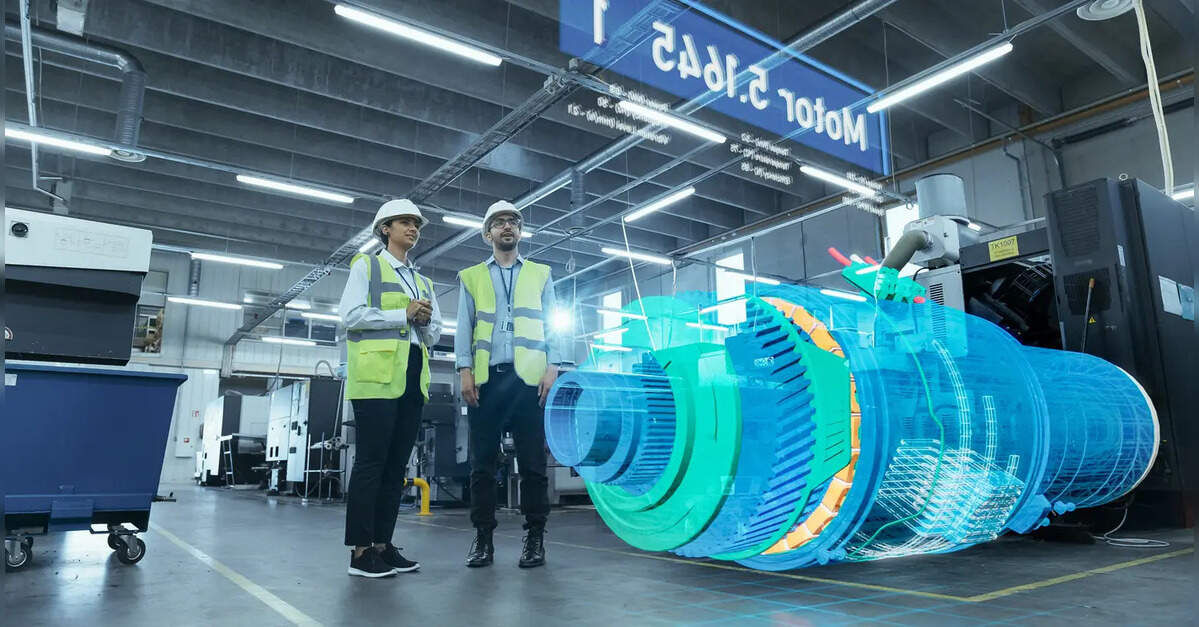

In 2026, the industrial metaverse has finally moved past the hype cycle. In manufacturing, it is not a virtual world in search of a use case. It is a practical operating layer that brings together digital twins, real-time IoT data, simulation, spatial computing, and AI so teams can see the factory, test decisions, and act with more confidence before they touch the physical line.
That distinction matters. Manufacturers do not buy technology for novelty. They buy it to reduce downtime, accelerate launches, improve first-pass yield, and make better decisions under pressure. What I am seeing now is a clear shift from isolated pilots to enterprise programs because the value is becoming measurable.
Deloitte reported that 92 percent of manufacturing executives surveyed were already experimenting with or implementing at least one metaverse-related use case, and many expected 12 to 14 percent improvements in metrics such as throughput and quality. That tells me the conversation has changed. The question is no longer, ‘Is the industrial metaverse real?’ The question is, ‘How quickly can we connect it to core operations and scale it responsibly?’
The answer starts with digital twins. A digital twin is no longer just a 3D model of a machine or a line. When it is connected to live telemetry, engineering data, maintenance history, and process logic, it becomes a shared decision environment. Engineering can evaluate a design change. Operations can simulate the impact on throughput. Maintenance can see likely points of failure. Supply chain teams can understand downstream effects before a change is executed. That shared context is where speed comes from.
BMW’s Virtual Factory is a strong example. The company says it is scaling digital twin applications across more than 30 production sites and using virtual simulation to validate plant, equipment, and workflow changes before launch. BMW has reported that collision checks for new vehicle launches that once took almost four weeks of physical testing can now be simulated in about three days. That is the industrial metaverse at its best: compressing time, reducing risk, and improving collaboration before steel moves or a line stops.
PepsiCo is showing the same pattern from a different angle. In its work with Siemens and NVIDIA, the company is using physics-based digital twins to simulate plant and warehouse operations. Early deployments have reportedly identified up to 90 percent of potential issues before physical changes, delivered a 20 percent increase in throughput, and reduced capital expenditure by 10 to 15 percent. When manufacturers can learn in a live digital environment instead of learning through disruption on the floor, time-to-value improves dramatically.
This also has major implications for people. One of the hardest problems in manufacturing is not simply labor availability. It is the transfer of experience. As experienced operators retire and production systems become more software-defined, immersive technologies are becoming a practical way to train faster, safer, and at greater scale. Workers can rehearse hazardous procedures, complex maintenance, and rare-event scenarios without shutting down equipment or putting themselves at risk.
The evidence here is increasingly strong. PwC found that VR learners completed training up to four times faster than classroom learners. A 2025 study in Computers & Industrial Engineering reported that 91 percent of participants were satisfied with the clarity and usefulness of AR-delivered maintenance information. For plant leaders, that is more than a training story. It is a productivity story, a safety story, and a workforce resilience story.
By 2026, resilience is no longer just about inventory buffers or backup suppliers. It is about optionality. Can you replan quickly? Can you test scenarios before disruption spreads? Can globally distributed teams work from the same operational truth? The industrial metaverse helps answer yes to those questions because it makes uncertainty visible and testable.
Standards will determine how fast this scales. Frameworks such as ISO 23247 for digital twins in manufacturing, along with newer interoperability efforts connecting twins, IoT, and immersive systems, are important because manufacturers cannot afford islands of innovation. The winners will be the companies that build reusable, governed, interoperable digital foundations, not just impressive demos.
The next step is already here: AI inside the twin. Instead of using the twin only to visualise what is happening, manufacturers are beginning to use AI to recommend layout changes, predict bottlenecks, identify quality risks, and evaluate trade-offs before execution. That is where the industrial metaverse becomes strategically important. It stops being a visualisation layer and becomes a continuous improvement engine.
My view is simple. In 2026, the industrial metaverse is becoming central to manufacturing operations because it helps the physical enterprise run better. The companies that lead will not be the ones with the flashiest immersive environments. They will be the ones that use this capability to launch faster, train smarter, operate more safely, and make better decisions with fewer surprises. That is not hype. That is operational advantage.
(The author is Chief AI Architect, UST. Views are personal.)