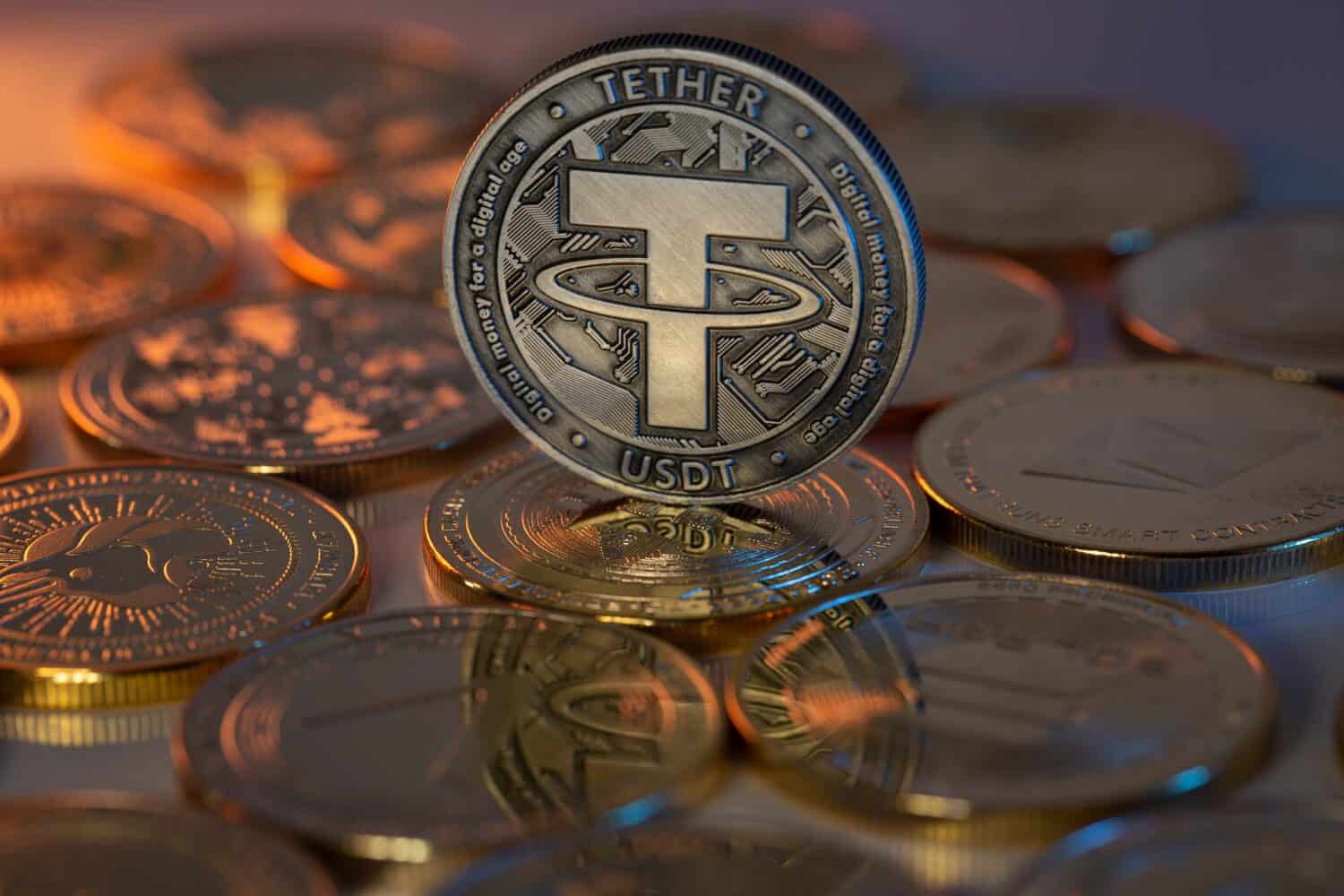

Why Did USAT Supply Rise So Quickly?
Tether’s USA₮ supply rose nearly 540% month over month in April, marking an early test of demand for regulated digital dollars inside the U.S. market.
The number of redeemable USAT tokens increased to more than 140 million in April from about 22 million in March, according to the latest attestation from issuer Anchorage Digital Bank. The reserve balance rose alongside issuance to $141.18 million, leaving a reserve surplus of $327,450 relative to outstanding tokens.
The growth is notable because USAT launched only in January as Tether’s attempt to enter the U.S. regulatory perimeter. Tether already dominates the global stablecoin market through USDT, but USAT has a different purpose: giving the company a dollar token structured for U.S. regulatory expectations rather than offshore or global usage patterns.
Tether CEO Paolo Ardoino linked the April growth to the changing policy backdrop. “The April report shows regulated digital dollar adoption accelerating at exactly the moment U.S. policy is beginning to catch up with market demand,” Ardoino said. “USA₮ redeemable tokens outstanding increased nearly 540% month-over-month, with reserves growing alongside issuance.”
How Is USAT Different From USDT?
USAT is designed to comply with expected U.S. stablecoin requirements, including 1-to-1 reserve backing in cash or high-quality liquid cash equivalents such as Treasurys. That makes it different from USDT’s broader global role, where the token is widely used across offshore exchanges, emerging markets, DeFi liquidity pools, and cross-border settlement channels.
The U.S. version is issued by Anchorage Digital Bank, a federally chartered crypto-native bank regulated by the Office of the Comptroller of the Currency. That structure gives USAT a supervised issuance model, which could make it more suitable for institutions that need clearer regulatory treatment before using stablecoins at scale.
Anchorage’s latest attestation showed USAT reserves made up of $13.43 million in cash and $127.75 million in reverse repurchase agreements collateralized by U.S. Treasury securities. The assets are held in segregated fiduciary trust accounts.
That reserve mix places USAT inside the wider shift toward Treasury-backed stablecoin models. Stablecoin issuers are increasingly being judged not only by token supply growth, but by reserve quality, disclosure cadence, redemption structure, and the legal status of the entity issuing the token.
Investor Takeaway
USAT’s April growth shows that stablecoin demand is starting to split between global liquidity tokens and regulated U.S. dollar tokens. The key question is whether supervised issuance can attract institutional users without weakening Tether’s existing offshore dominance through USDT.
Why Does The GENIUS Act Matter?
USAT’s growth comes as U.S. lawmakers move closer to a clearer stablecoin framework under the GENIUS Act. The bill would set rules for payment stablecoin issuers, reserve composition, redemption rights, and oversight. For issuers, the law could reduce uncertainty. For investors and institutions, it could define which digital dollars are acceptable for regulated use.
Ardoino said clearer rules would change institutional demand. “As stablecoin rules become clearer, institutions are going to look for digital dollars that combine scale, supervised issuance, and transparent reserve reporting,” he said.
That is the strategic opening USAT is trying to use. Tether has scale through USDT, but its U.S. market access depends on meeting domestic regulatory expectations. Anchorage gives the product a federally supervised issuer, while the attestation process gives users a clearer view of token backing.
The issue is whether USAT can gain enough distribution to matter. Supply growth from 22 million to more than 140 million tokens is a sharp early move, but it remains small compared with USDT’s global footprint. The market test will be whether exchanges, payment companies, fintech firms, and institutional desks choose USAT for U.S.-compliant dollar settlement.
What Are The Market Implications?
For Tether, USAT offers a way to protect and extend its stablecoin franchise as U.S. rules tighten. The company remains one of the most profitable firms in crypto, with $10 billion in net profit in 2025 and more than $1 billion in the first quarter of 2026. Its excess reserves rose to a record $8.23 billion in the same quarter, according to its latest attestation by BDO.
The Treasury market angle is also becoming more important. Earlier this year, USAT CEO Bo Hines said Tether could become a “top 10” U.S. Treasury purchaser if stablecoin growth continues. That reflects a broader policy issue: large stablecoin issuers are becoming material holders of short-term government-linked assets as token supply expands.
Anchorage is also building a wider stablecoin infrastructure business. Its stablecoins-as-a-service platform has been used by Western Union, OSL Group, and Falcon Finance, showing that regulated issuance infrastructure is becoming a separate competitive market inside digital assets.
For institutions, USAT’s April attestation gives an early benchmark for reserve quality and adoption. The token is still small, but its rapid supply increase shows that demand for regulated stablecoin products is rising before U.S. rules are fully finalized. If that trend continues, the stablecoin market may become less defined by offshore liquidity alone and more divided by regulatory status, issuer structure, and reserve transparency.