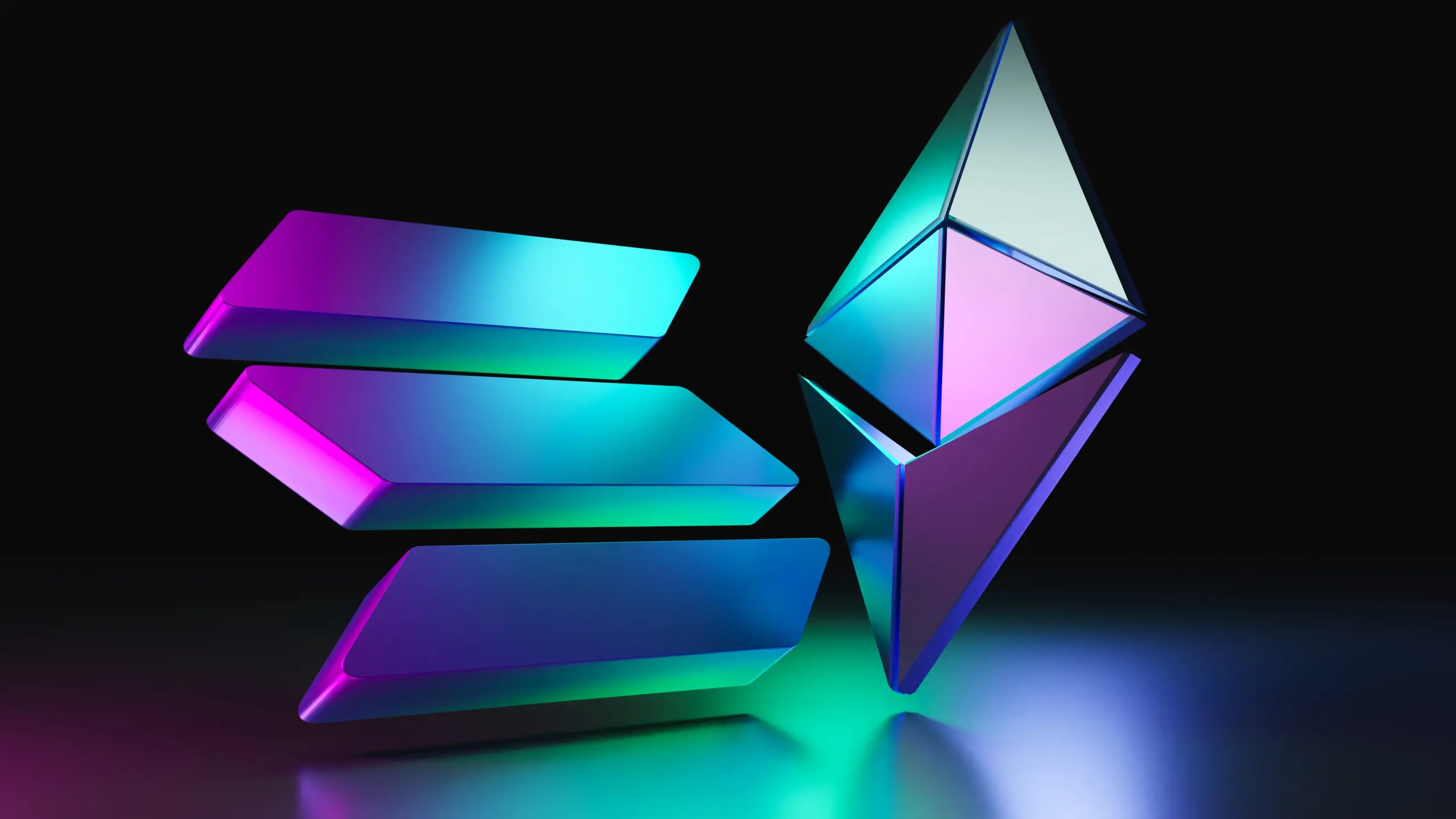

For nearly a decade, it seemed inevitable that Ethereum would become the institutional backbone of blockchain finance.
Its dominance in smart contracts, developer tooling, and DeFi ecosystems made it the safe, predictable choice for any large-scale integration. But 2025 has brought a twist: as the tokenization of traditional assets accelerates, Solana – once seen as a playground for retail speculation — is emerging as a credible alternative.
The chain that built its reputation on meme coins and fast-paced trading is now being reconsidered as a potential settlement layer for financial institutions. Solana’s strengths – speed, efficiency, and sub-cent transaction fees – are beginning to look less like novelties and more like infrastructure. Analysts argue that its design, built for high-frequency execution, could fit more naturally into markets that demand throughput and low latency.
That shift in perception hasn’t gone unnoticed. Institutional strategists such as Bitwise CIO Matt Hougan have begun calling Solana “the new Wall Street,” citing its ability to process thousands of transactions per second. Stablecoin issuers and tokenization projects are quietly expanding on the network, testing whether its architecture can support the reliability expected by traditional markets.
Still, Solana’s ambitions remain far from realized. The network’s real trading activity is a fraction of its technical capacity, and it moves nowhere near the scale of exchanges like Nasdaq, which handles trillions in monthly volume. Developers are working to close that gap with upgrades aimed at stabilizing validators and improving block scheduling – steps meant to make Solana less experimental and more industrial.
The economic potential, however, is hard to ignore. Artemis CEO Jon Ma estimates that the global tokenization market could reach $10–16 trillion by 2030. If Solana were to capture even a small share – say, five percent – its market cap could climb toward $880 billion. His model values blockchains less as speculative assets and more as digital infrastructure, where efficiency and fee capture matter more than narrative.
Whether that vision becomes reality depends on whether institutions can trust a blockchain originally built for traders and developers rather than regulators. Ethereum still holds that advantage: mature, battle-tested, and compliant by design. Yet Solana’s evolution hints at a new possibility — that the fastest network in crypto could one day power the slowest-moving institutions on Earth.