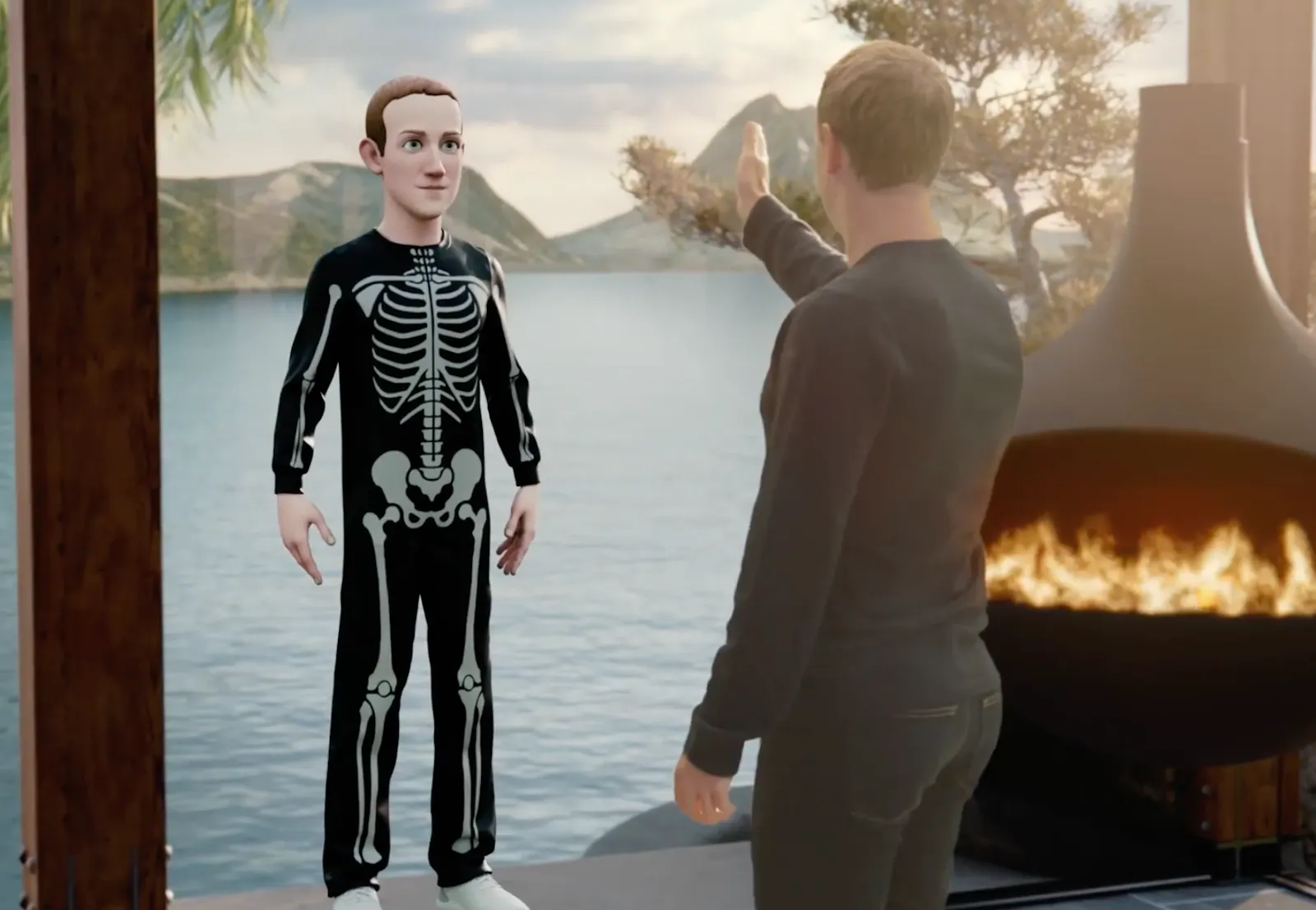

On Tuesday, in a stark and much-needed reminder not only of the metaverse’s existence, but also of its prolonged disassembly, Meta announced that it would be pulling Horizon Worlds, its metaverse social network, from its VR headsets.
By Wednesday, the company’s plans had changed, with Meta’s CTO announcing on Instagram, “We have decided, just today in fact, that we will keep Horizon Worlds working in VR for existing games” — a U-turn that a Meta representative then confirmed to TechCrunch.
This latest debacle (and a catalog of others before it) makes you think that switching off the metaverse might no longer be a question of “if,” rather than “when?” Both questions can, naturally, be answered with a third: “Will anyone actually care?”
Vaulting ambition, which o’erleaps itself…
None of this, it should be noted, was for lack of trying — or spending. In 2021, after rebranding the entire company around his bet that we’d rush to his new and exciting virtual universe, CEO Mark Zuckerberg said, “Over time, I hope that we are seen as a metaverse company.” To his credit, Zuckerberg then put his money where his mouth was: from Q4 2020 to the end of 2025, Meta racked up losses of around $80 billion across its Reality Labs division, which houses the metaverse as well as other VR and AR products.
Though that cash burn might make the metaverse one of the costliest wrong turns in recent tech history, it’s hardly the only project to have been hailed as the future, only to quickly fade and become a punchline or forgotten ember burning on the dumpster fire of technology missteps.

Sherwood News
Much-hyped products from the biggest names in Big Tech, like Apple’s Vision Pro or Alphabet’s Google Glass, have seen similarly short-lived buzz cycles and have come to be widely regarded as failures. Meanwhile, NFTs, one of the most talked about (and ridiculed) tech concepts of the 21st century, have nearly vanished, with a report suggesting that 96% of NFT collections were “dead” by 2024. At least Meta can console itself with the fact it doesn’t (yet) have a digital graveyard dedicated to its scrapped products, like Google or Microsoft.
AI is a good example of how tech companies perceive the risks of overspending on potentially groundbreaking technologies — you simply cannot be left behind. To the businesses at the top, burning tens of billions of dollars in the process is a gamble worth taking when your company’s value is measured in multiple trillions.
Even though the decline must be tough for Zuck and co. to take, our thoughts through this latest tech wind-down are mostly with the user who shelled out $450,000 to become Snoop Dogg’s neighbor in the metaverse five years ago (yes, really).