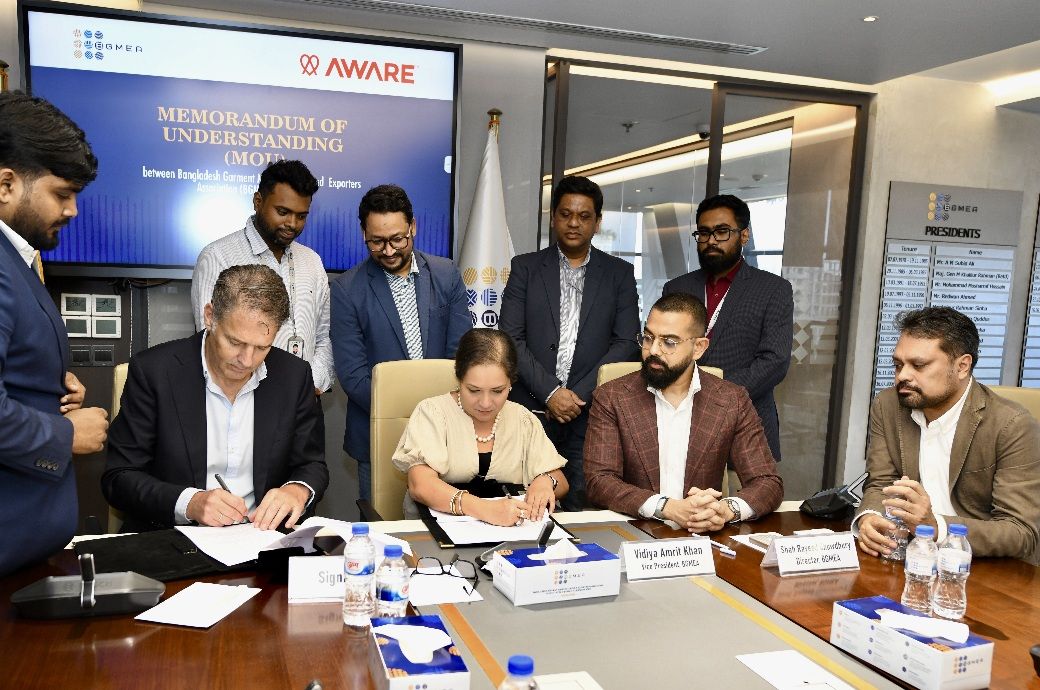

The initiative aims to help Bangladesh’s garment exporters comply with the European Union’s mandatory DPP regulation, which will come into force in 2027. The agreement was signed in Dhaka by BGMEA Vice President Vidiya Amrit Khan and AWARE Founder and Managing Director Feico van der Veen.
Bangladesh’s readymade garment (RMG) sector is set to adopt blockchain-based transparency and Digital Product Passport (DPP) systems ahead of the European Union’s 2027 regulations.
BGMEA and Dutch traceability platform AWARE signed an MoU to enable end-to-end traceability of fibres, yarns, and garments through blockchain-backed digital records, helping exporters strengthen compliance.
Under the partnership, BGMEA member factories will be able to generate blockchain-anchored digital records tracing garments from fibre origin to finished products. The system will provide verified information on raw material sourcing, production processes, and environmental footprint through QR-code-enabled Digital Product Passports.
The move is significant for Bangladesh’s garment industry, which depends heavily on imported fibres and yarns from countries such as China and India. Through blockchain-backed data tokens created at the fibre and yarn production stage, traceable information will move across borders along with physical shipments, enabling end-to-end supply chain visibility.
According to BGMEA, the adoption of blockchain-based traceability will help garment manufacturers improve transparency, strengthen compliance, and position Bangladesh as a reliable sourcing destination for European brands facing stricter sustainability and traceability requirements under the EU’s Ecodesign for Sustainable Products Regulation (ESPR).
The agreement also ensures that factories retain ownership and control over all production data generated through the platform. Pilot projects involving selected spinners and garment manufacturers are expected to begin immediately to develop cross-border fibre-to-garment DPP supply chains connecting Bangladesh with European buyers.
Fibre2Fashion News Desk (CG)