
Introduction
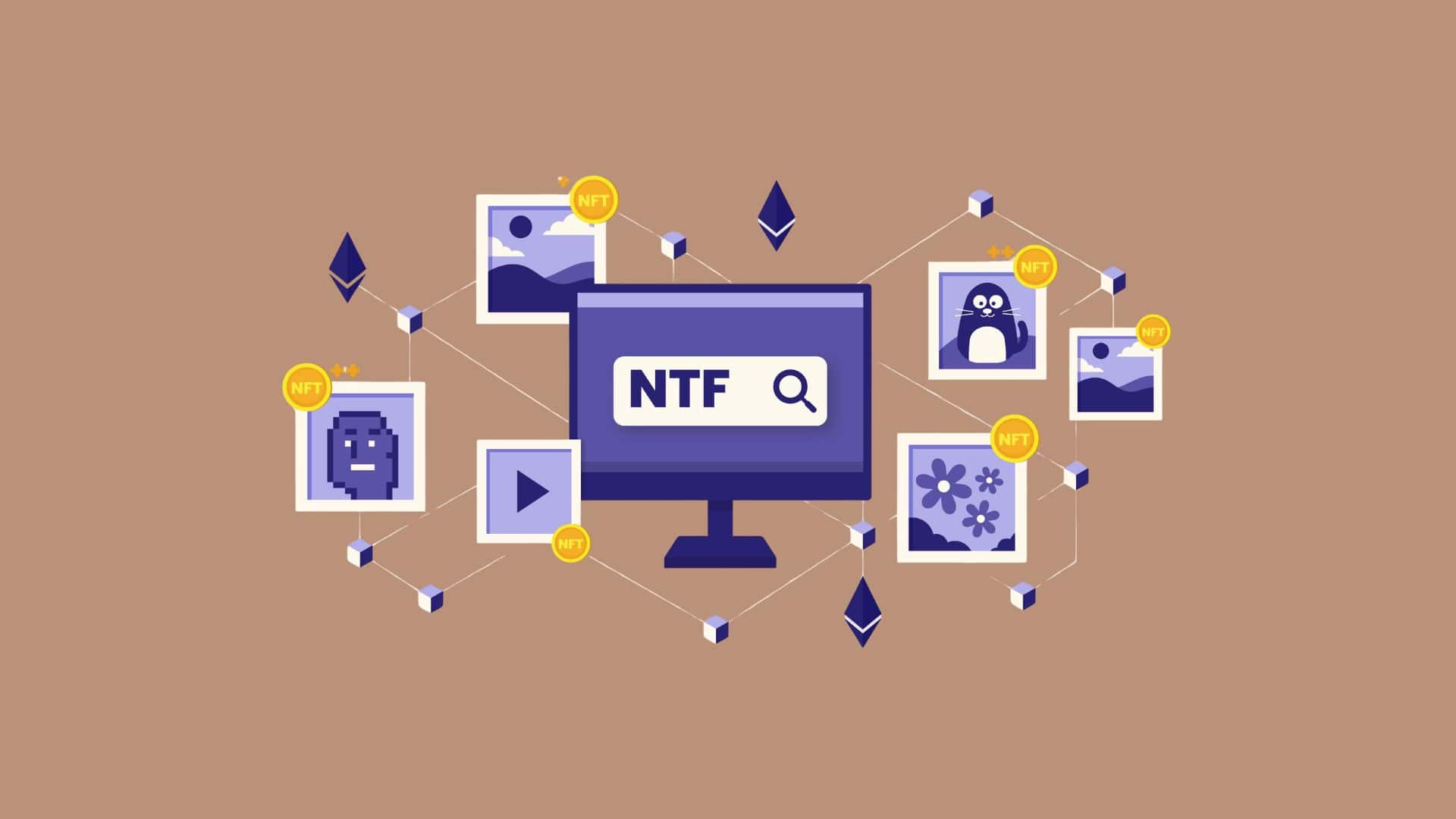
NFT Statistics: Picture a scenario where digital art is sold at exorbitant prices. Virtual real estate thrives in such an environment. Furthermore, in-game collectibles carry genuine value. This is the realm of Non-Fungible Tokens, commonly known as NFTs. NFT, which stands for non-fungible token, is a particular form of cryptocurrency used to denote rare digital assets. Even though the first NFT appeared in 2014, it was only after 2018 that the NFT market made headlines. Various startups were busy creating proprietary blockchain tokens for distinct digital assets like artworks and media. In recent times, NFTs have been ruling the tech and art world. Here is an overview of some compelling NFT facts.
Editor’s Choice
- More than 12,000 NFT transactions take place every day.
- Over USD 44.2 billion worth of cryptocurrency were used by the NFT user community on NFT collections and marketplaces during the year 2021.
- The nation with the highest percentage of NFT ownership by the 18-34 age range is Singapore, at 9%.
- The number of millennial NFT collectors is 23% in the USA.
- “The Merge” by Pak is still the most expensive NFT to be sold at USD 91.8 million.
- Gaming NFTs occupy 25% of trading volumes because of play-to-earn systems and metaverse adoption.
- The Doge meme is still the highest-ranking meme NFT, fetching nearly USD 4.2 million.
General NFT Statistics
- More than 12,000 NFT transactions take place every day.
- Also, it has been revealed that there are more than 10,000 wallets actively involved with NFT transactions daily along with about 6,000 unique buyers.
- NFTs are expected to witness a 11.01% decline in their market value between 2024 and 2025 OpenSea is the largest peer-to-peer NFT exchange with a trading volume of about USD 14.68 billion.
- OpenSea takes 90% of all the trade volumes related to NFTs.
- Not all NFTs make thousands of dollars. About 53.6% of the registered NFT trades are noted as being made for an amount of less than $200. Around 75% of NFTs are priced under USD 100.
- What is worth mentioning here is that the number of wallets making transactions in NFTs grew substantially in 2021. While there were around 545,000 wallets making such transactions in 2020, there were about 28.6 million wallets doing the same in 2021.
- According to the source, approximately 1,000 to 3,000 wallets purchased NFTs daily during April and May 2021.
- About a quarter of all Americans consider themselves as collectors of physical objects.
- In addition, nearly 42% of millennials have physical collections.
NFT Market Statistics
- Over USD 44.2 billion worth of cryptocurrency were used by the NFT user community on NFT collections and marketplaces during the year 2021.
- Such cryptocurrency volume was deposited into two smart contracts related to NFT, including ERC-721 and ERC-1155 smart contracts.
- Market transactions for NFTs totalled at USD 25.8 billion during 2021.
- This amount was 18,400% more compared to all market activity that occurred from 2016 to 2020.
- NFT income was estimated to total USD 3.546 billion in 2023.
- In addition, the NFT income was predicted to be USD 4.735 billion in 2024.
- “Art Blocks” NFT project based on the Ethereum blockchain had a market capitalisation of USD 850 million. The second place by market capitalisation belonged to Foundation (FND) (USD 135.14 million).
- In January 2023, the largest NFT collection market capitalisation was recorded for Crypto Punks, which reached USD 1.7 billion.
- Following the leader was Ratio with 17% SOV and Kalamint with 8% SOV.
- “Charlie Bit My Finger” YouTube video released in 2007 was sold for USD 761,000 in May 2021 as an NFT.
- Second place in terms of sales cost was occupied by the sale of the “Nyan Cat” meme for $600,000 in April 2021.
- Japan NFT market was forecasted to reach 5.4 billion yen in 2022.
- The market capitalisation of the Cryptopunks NFT collection was set at a market cap of USD 2 billion.
NFT Users Statistics
- In October 2022, Chinese internet users used Google to search for information about NFTs the highest number of times.
- In second place is Hong Kong (77%), followed by Nigeria (73%) as the third.
- Ninety percent of Japanese participants recognized the existence of NFT in October 2021.
- Similarly, around 13.5% were aware of purchasing NFT.
- According to a 2022 study, seventy percent of global game developers were uninterested in integrating NFTs into their studios.
- Twenty-one percent were somewhat interested, seven percent were very interested, and one percent had already used NFTs.
- In March 2021, 44% of male respondents aged between 45-54 purchased NFTs because they were crypto art enthusiasts.
- On the other hand, 54% of male respondents aged 55-65 purchased NFTs because they saw good returns on investment.
- Another 25% of male respondents aged 35-44 purchased digital art for returns on investment.
NFT Ownership Split By Age Statistics
- The nation with the highest percentage of NFT ownership by the 18-34 age range is Singapore, at 9%.
- India ranks second, having an 8% ownership rate for the 18-34 age range. Also, its age distribution is quite even.
- Vietnam and Ireland have spikes in the 55+ age range, with 11% each.
- The United States of America, although a prominent player in the international arena, has lower rates. This nation owns 5%, 3%, and 3% in the 18-34, 35-54, and 55+ age ranges, respectively.
- The nations with the lowest rates of NFT ownership in the table are Japan and Germany, where no age range exceeds 2% ownership.
| Country | 18-34 | 35-54 | 55+ |
| Singapore | 9% | 4% | 3% |
| India | 8% | 7% | 5% |
| United States | 5% | 3% | 2% |
| Nigeria | 5% | 4% | 3% |
| Brazil | 5% | 4% | 3% |
| Philippines | 5% | 3% | 2% |
| Hong Kong | 5% | 6% | 5% |
| Indonesia | 5% | 3% | 4% |
| Ireland | 5% | 2% | 2% |
| Vietnam | 5% | 6% | 11% |
NFT Demographic Statistics
- The number of millennial NFT collectors is 23% in the USA.
- Studies show that there is a presence of about 250,000 NFT traders who are actively involved on the platform. It is a substantial share of all the NFT collectors around the world.
- Research findings indicate a difference in the collection of NFTs among men and women. It is evident that the male gender is more likely to be involved in NFT collecting than women at a ratio of 3:1.
- One of the continents with high numbers of NFT collectors is Asia. A survey on top countries adopting NFTs conducted among 28,000 participants from 20 countries found that the first five top adopters of NFTs come from Asia.
- The Philippines ranks as the country with the highest number of NFT holders by accounting for about 32%, followed by Thailand, Malaysia, UAE, and Vietnam.
- Nigeria has been found to have high growth in NFT adoption at a ratio of 21.7%.
- The percentage of NFT ownership among adults in Thailand stands at 53%. Out of this number, 30% are female while 23% are males.

Expensive NFT’s Sold Statistics
- “The Merge” by Pak is still the most expensive NFT to be sold at USD 91.8 million.
- Everydays: The First 5000 Days by Beeple comes in at the second highest spot having sold at USD 69.3 million.
- Clock by Pak and Julian Assange occupies the third position after being sold at USD 52.8 million to help pay for Julian Assange’s legal expenses.
- HUMAN ONE, another masterpiece by Beeple, sold at USD 28.95 million during a Christie’s auction.
- CryptoPunk #5822 is the highest selling punk at USD 23.7 million.
- CryptoPunk #7523 “Covid Alien” went on to sell at USD 11.75 million during an auction held by Sotheby’s.
- TPunk #3442, the most expensive punk on Tron platform, sold at USD 10.5 million.
- CryptoPunk #4156, among 24 Ape Punks, was sold at USD 10.26 million.
- CryptoPunk #5577, an image of an ape wearing a cowboy hat, was sold at USD 7.7 million.
- CryptoPunk #3100, an Alien Punk with a headband, sold for USD 7.58 million.
| The Merge | USD 91.80 million |
| Everydays: The First 5000 Days | USD 69.30 million |
| Clock | USD 52.80 million |
| HUMAN ONE | USD 28.95 million |
| CryptoPunk #5822 | USD 23.7 million |
| CryptoPunk #7523 | USD 11.75 million |
| TPunk #3442 | USD 10.5 million |
| CryptoPunk #4156 | USD 10.26 million |
| CryptoPunk #5577 | USD 7.7 million |
| CryptoPunk #3100 | USD 7.58 million |
NFT Trading Volume By Category Statistics
- PFP NFTs account for the highest percentage of trading volume at 37%, continuing to dominate as the most popular type of NFT.
- Gaming NFTs account for 25% of trading volume due to play-to-earn systems and metaverse adoption.
- Music/Media NFTs make up 15% of trading volumes due to significant growth of digital creator assets.
- The Other type accounts for 12% of trading volumes of NFTs, including niche applications.
- RWA NFTs (Real-World Asset NFTs) amount to 11% of trading volumes in NFT markets.

NFT Website Traffic Statistics
- According to the latest traffic and engagement analysis of nft.com till June 2025, the number of visits made by the visitors is 36,000 (-4.5K).
- The percentage of decline in visits from the previous period is 11.03%.
- The bounce rate was 37.97% with each visitor looking through 1.87 pages.
- The average session duration was 19 seconds.
- Worldwide, the website NFT ranked #780,320 while in India #264,665 and in categories 4,607.
Meme NFTs And Their Earnings Statistics
- The Doge meme is still the highest-ranking meme NFT, fetching nearly USD 4.2 million.
- The Charlie Bit My Finger meme was auctioned off for USD 760,999.
- The famous GIF NFT of Nyan Cat was auctioned off for approximately USD 600,000, or around 300 ETH.
- The original photograph NFT of Disaster Girl fetched roughly USD 500,000, or around 180 ETH.
- The Overly Attached Girlfriend meme earned somewhere between USD 411,000 and USD 460,000.
- The Bad Luck Brian NFT meme earned approximately USD 36,000 to USD 45,500.
NFT Recent Development Statistics
- The big brands like Disney, Spotify, and Netflix rolled out NFT integrations, offering exclusive access to token-gated content. Over twenty big international music and sports events adopted NFT ticketing solutions with tokenized passes.
- The dynamic NFTs with editable metadata have found applications in edtech and healthcare for certification and patient/learner data management purposes. The latest network update of the Zora Protocol platform is concentrating on near-zero transaction costs and creator-friendly tools for NFT creation and marketplace.
- The AI-generated NFTs in Europe are being brought under creative ownership and copyright guidelines.
Conclusion
With our exploration of the NFT market data over the past decade, we can now have a clearer idea of how the creative industry, with its soaring NFTs sales and trading volume and the historic data on NFT sales, is constantly drawing the interest of many across the globe. The exponential increase in NFTs sales and value over the past years shows how the user interest and mainstream acceptance of digital tokens and ownership through blockchain technology continue to grow. The numbers shown above not only illustrate the rapid expansion of NFTs but also show how they have become mainstream in nature and capable of handling difficulties.
FAQ
An NFT (Non-Fungible Token) refers to a digital certificate of ownership for a specific item stored on a blockchain. This means it cannot be swapped 1:1 with another token and, therefore, is “non-fungible.” In simple terms, an NFT represents an authentic, secure proof-of-ownership for a digital or physical object.
No, an NFT cannot be classified as “real money,” since it is just a digital collectible storing information about ownership of something. These collectibles may be purchased and even resold for profit, but their main purpose is purely speculative.
No, investing in NFT is highly risky and may involve heavy losses, scams, and uncertainties regarding legality. In addition, NFTs represent highly speculative financial objects and tend to experience large shifts in value. Moreover, NFTs are popular for various scams such as “rug pulls” or art theft. The market is not regulated and makes possible selling fake items that cause harm to buyers’ finances.