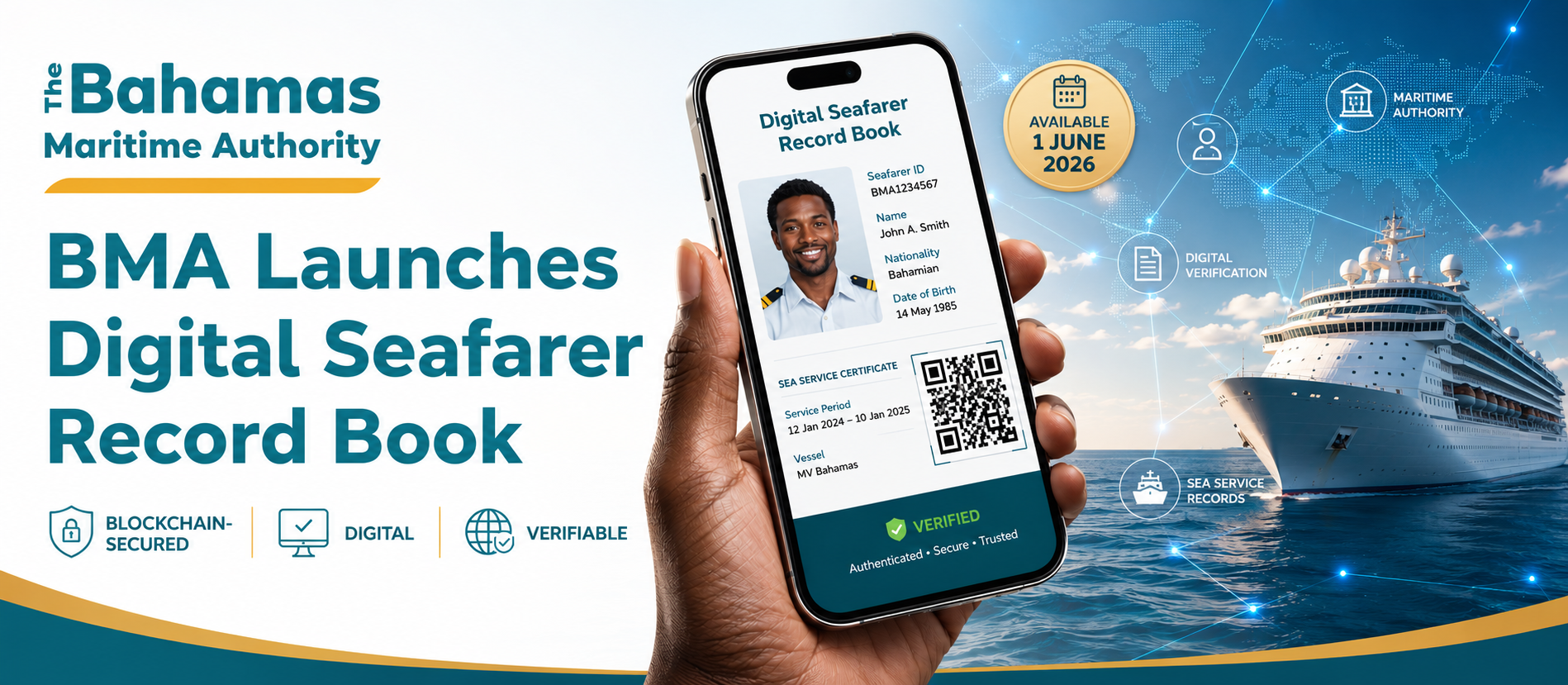

The Bahamas Maritime Authority (BMA) has launched a blockchain-secured Digital Seafarer Record Book (DSRB) to replace traditional paper-based sea service records.
The platform introduces a fully digital system for recording, verifying and sharing seafarer credentials.
The BMA said the system improves efficiency while reducing administrative burdens for seafarers, shipowners and maritime administrations.
The Digital Seafarer Record Book includes digital discharge certificates and secure identity verification tools.
The platform enables real-time sharing of sea service records through tamper-resistant technology.
The system uses blockchain-based safeguards to improve data integrity, security and resilience.
The BMA developed the platform to comply with IMO dataset requirements, the IMO Compendium on Facilitation and Electronic Business and maritime cybersecurity standards.
The authority said these measures support international interoperability.
The launch follows a pilot project conducted with Carnival Cruise Line and IDSure.
The pilot tested the platform using high-volume seafarer documentation applications.
The BMA said the pilot confirmed the platform’s reliability, scalability and readiness for deployment.
The system allows shipmasters to digitally verify sea service records through integrated authentication functions.
Each entry includes QR code verification, allowing authorized parties to independently validate records.
“This initiative represents an important step forward in improving the efficiency, security and reliability of seafarer record verification,” said Captain Kapila Malawwethanthri, Deputy Director for Seafarers & Manning at the BMA.
He said the system supports a more interoperable approach to maritime administration while reducing administrative burdens.
Captain Dwain Hutchinson, Managing Director and CEO of the BMA, said the launch supports the authority’s wider modernization strategy.
“The launch of the Digital Seafarer Record Book forms part of the BMA’s broader programme of regulatory modernisation and digitalisation,” he noted.
The Digital Seafarer Record Book became available to eligible seafarers from 1 June 2026.