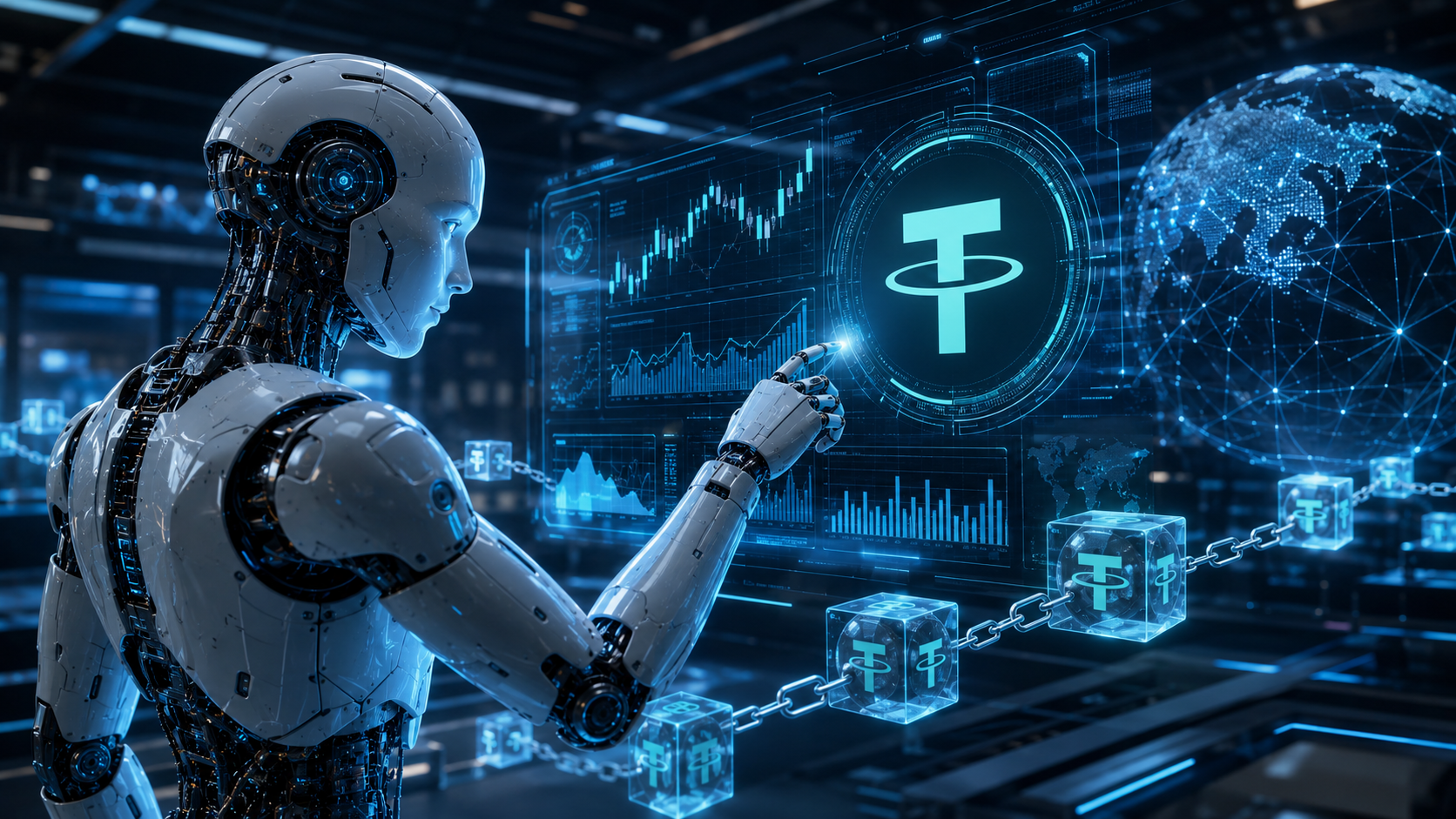

In a defining moment for the convergence of crypto, artificial intelligence, and robotics, Tether has led a funding round of up to $1.4 billion into NEURA Robotics, signaling a major expansion of blockchain infrastructure into the physical world.
The Series C round, announced June 10, ranks among the largest private investments ever made in humanoid and cognitive robotics. It brings together a powerful consortium of global technology and industrial players, reinforcing rising confidence in Physical AI systems that can perceive, learn, and act beyond digital environments.
At the core of the deal lies a strategic shift. Tether is not only investing capital but embedding its technology stack directly into NEURA’s robotics ecosystem. Through its Wallet Development Kit, robots will be equipped with self custodial crypto wallets, allowing them to independently send and receive payments, manage funds, and transact without centralized oversight.
This capability opens the door to a new class of autonomous economic agents. Machines could earn micropayments for tasks, settle transactions in real time, and participate in decentralized financial systems with minimal human intervention.
Tether CEO Paolo Ardoino emphasized the importance of autonomy in emerging machine systems, noting that intelligent machines must be able to process data locally, make decisions independently, and transact without reliance on intermediaries. Alongside wallet integration, Tether is also collaborating on its edge focused AI runtime designed to deliver low latency intelligence directly on devices.
NEURA Robotics is advancing what it calls the Neuraverse, a shared intelligence platform where robots continuously learn from each other, exchange capabilities, and improve collectively. The company’s vision includes humanoid robots, industrial arms, mobile units, and service machines operating within a unified learning network.
The fresh capital will accelerate production scaling toward millions of units by 2030, expand global training environments known as NEURA Gyms, and strengthen deployment infrastructure across industries. The company already holds an order pipeline exceeding $1 billion, reflecting strong demand for its systems.
For the crypto sector, the implications are significant. Tether’s move marks a transition beyond stablecoins into foundational infrastructure for what is increasingly described as the machine economy. By enabling robots to operate with native financial capabilities, blockchain technology could underpin entirely new economic models across logistics, manufacturing, healthcare, and retail.
As artificial intelligence moves from screens into physical systems, and as global labor dynamics shift, investments in robotics are accelerating. With backing from major technology players and now deep integration with crypto rails, NEURA Robotics is positioning itself at the center of this transformation.
The next phase is expected to focus on real world deployment of wallet enabled robot fleets. For the broader digital asset industry, this development signals a meaningful step toward mainstream adoption through autonomous systems that do not just perform work, but participate economically.