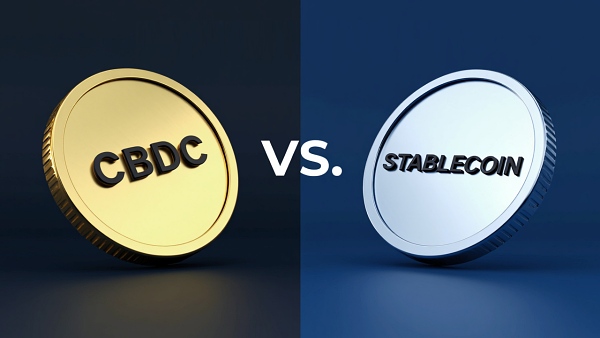

The U.S. Congress passed a bill that blocks the Federal Reserve from issuing a central bank digital currency (CBDC) until the end of 2030, reshaping the U.S. digital dollar landscape around the private sector.
On June 28, blockchain outlet CryptoSlate reported that the move delays the entry of a government-issued digital dollar while bringing forward competition between stablecoin issuers such as Circle and Tether and big banks over tokenised deposits.
The 21st Century Housing Act passed the Senate on June 22 by 85-5 and cleared the House the next day by 358-32. The bill includes a provision that bans a Fed-issued CBDC for four years. That means the Fed cannot roll out a retail digital dollar at least before 2031. Even after that, it would need a new congressional approval process to restart the effort.
Political opposition had already been taking shape. Kevin Warsh (케빈 워시), the Fed chair, called a U.S. CBDC a “wrong policy” at his confirmation hearing. Treasury Secretary Scott Bessent (스콧 베센트) also said, “The digital dollar has been taken off the table.” U.S. President Donald Trump also formalised his opposition in January 2025 through an executive order.
Market attention is focused less on the ban itself than on what comes next. The Fed conducted research reports and small-scale experiments by the Federal Reserve Bank of Boston, but it did not reach a concrete launch stage. With the government blocking a would-be competitor that is not immediately forthcoming, competition for leadership in the private market has become more important, according to an assessment.
The direct beneficiaries are likely to be private-sector stablecoins. Stablecoins are digital tokens that track a $1 value, backed by reserves such as cash and short-term Treasuries. The market is currently led by Circle’s USDC and Tether’s USDT, and the two tokens account for more than 80 percent of a roughly $320 billion market. The GENIUS Act, put in place last year, imposed federal rules on issuers such as 1-to-1 reserves, monthly disclosures and a ban on paying interest to holders. If a CBDC had been introduced, private issuers would have had to face a competitor backed by the central bank’s credit and balance sheet.
But the bigger competitor could be banks. More than 12 lenders, including JPMorgan, Citigroup, Bank of America and Wells Fargo, are building a joint tokenised deposit network through The Clearing House, a bank-owned payments company. The target is the first half of 2027. Some banks refer to the project as “Bridge” or “Chain”.
Tokenised deposits are traditional bank deposits recorded on a blockchain ledger. The funds remain bank liabilities and stay within the scope of deposit insurance, while also absorbing some features that stablecoins tout, such as instant settlement, 24-hour transfer and programmable payments. The GENIUS Act excluded deposits recorded on a digital ledger from the definition of payment stablecoins. The Federal Deposit Insurance Corp. (FDIC) also drew a line in April, saying stablecoin reserves do not automatically pass deposit insurance protection to token holders, while tokenised deposits retain normal deposit protections.
Banks are moving quickly because deposits are the core foundation of their business. Funds need to remain in checking and savings deposits for banks to make loans based on them. U.S. banking industry groups warned Congress last year that as much as $6.6 trillion could flow out of the deposit system if regulation is poorly designed. JPMorgan Chief Executive Jamie Dimon has also strongly opposed allowing a structure in which stablecoin platforms effectively distribute profits.
Views also differ within policy circles. Bank of England’s Megan Greene (메건 그린) said at a conference in late May that tokenised deposits are likely to replace stablecoins within five years. She likened CBDCs to a slow tortoise, stablecoins to a fast rabbit and tokenised deposits to a rhino she would bet on. By contrast, Fed Governor Christopher Waller (크리스토퍼 월러) defended stablecoins at the same event, saying they are not dangerous but a tool to spur competition in payments.
Still, the success of a bank-led network is not yet assured. A Bank of America payments executive acknowledged that customers are not yet actively demanding tokenised deposits. A blockchain vendor has not been selected, and a launch is more than a year away. Initial demand is also likely to be concentrated in corporate treasury management and cross-border payments, prompting a view that stablecoins could maintain the upper hand in public crypto markets for the time being.
Ultimately, the bill confirmed one thing. The Fed’s retail CBDC is on hold until before 2031. The form of the digital dollar Americans will actually use has now shifted into a contest between stablecoin issuers and banks. The final outcome depends on how much interest each camp can offer, how supervisory intensity is set, and who moves first to capture commerce, fintech and payroll systems.