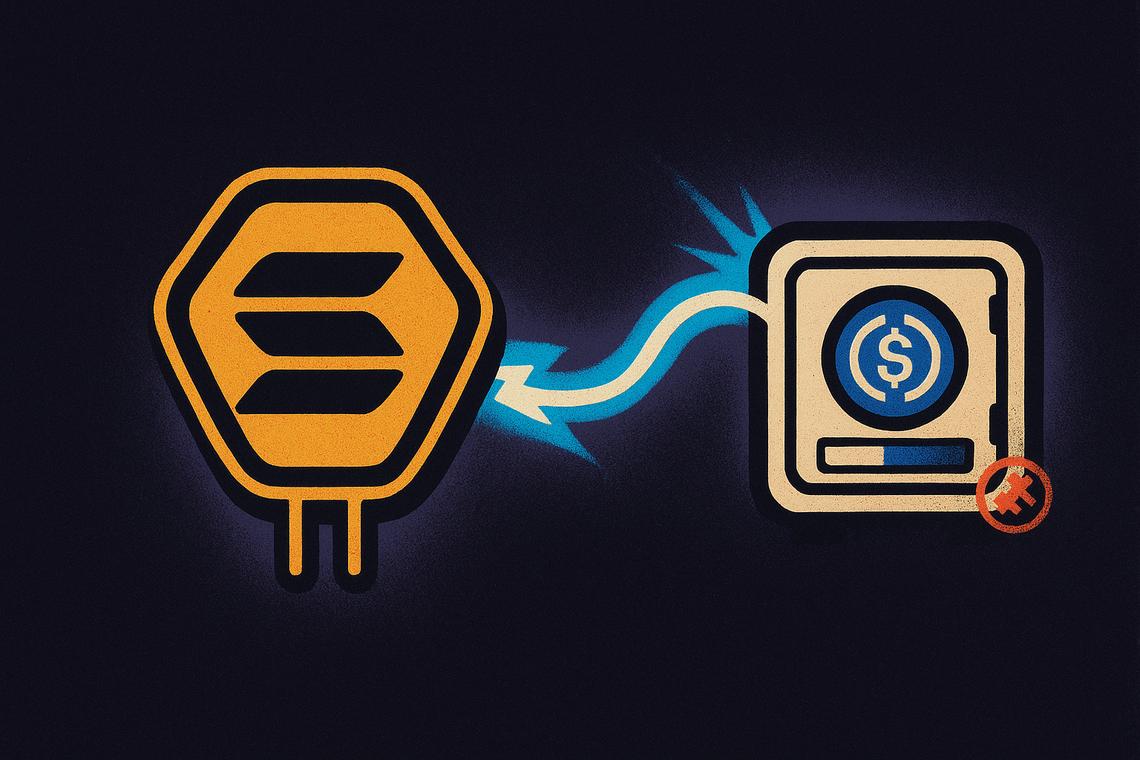

Coinbase Solana lending just got a meaningful upgrade: eligible U.S. customers can now post Solana (SOL) as collateral through Coinbase’s Morpho-based borrowing service and borrow up to $100,000 in USDC without selling their tokens. The feature is available to users outside New York State, adding a new liquidity option for SOL holders.
That may sound like a routine product update. However, for crypto users, it changes a familiar trade-off: whether to sell an asset to unlock cash-like flexibility. With this addition, Coinbase is widening the range of assets available inside its on-chain lending setup.
It also pushes another major token deeper into a structure that blends a large U.S. exchange with DeFi rails. Coinbase launched the service with Morpho earlier in the year, and adding SOL expands the borrowing options further.
Coinbase adds SOL collateral to its lending service
The new option lets eligible U.S. customers use Solana (SOL) as collateral and borrow as much as $100,000 in USDC stablecoins. For traders and long-term holders alike, that means access to funds without exiting a SOL position.
This is the core appeal of Coinbase Solana lending: it gives users a way to tap liquidity while keeping market exposure. In practice, that matters when investors want capital but do not want to part with an asset they still expect to hold.
Coinbase’s move also sharpens its position in a lending market where crypto-backed borrowing remains a closely watched use case. The company is expanding in a field that has also included Binance, Kraken, and BlockFi, while using Morpho-based lending to anchor the product on DeFi infrastructure.
How the Morpho-based lending works
Non-custodial setup
The service is non-custodial and runs through smart contracts, meaning users retain control of their assets within the contract structure rather than handing them over in a traditional custodial arrangement.
That design is a notable part of the product. It gives Coinbase exposure to on-chain lending demand while keeping the mechanics tied to DeFi infrastructure through Morpho. For users, the pitch is straightforward: borrow against crypto in a structure built around smart contracts instead of a standard centralized lending stack.
Borrowing terms and risk controls
Borrowing limits and rates are set algorithmically based on market conditions and the volatility of the collateral. Coinbase has capped borrowing at $100,000 in USDC per user, but the actual amount available depends on the risk profile of the collateral and market conditions at the time.
That matters because SOL is not treated as a static asset in a lending model. The more volatile the collateral, the more important those automated controls become. In other words, Coinbase Solana lending expands access, but it does so inside a system that adjusts to market risk in real time.
Who can use the service
State restriction
The product is currently available to users outside New York State. New York residents are excluded from the service.
That geographic limit is one of the clearest practical boundaries around the rollout. For a nationwide brand like Coinbase, access rules still depend heavily on local regulatory conditions, and New York remains a separate case for many crypto services.
Eligibility checks
Users also have to pass identity verification and meet Coinbase’s risk assessment criteria. So while the service is on-chain in its lending mechanics, access is still filtered through compliance and user checks.
That combination is important. It shows how Coinbase is trying to thread two worlds at once: DeFi-native borrowing on the backend, and a more familiar regulated entry point on the frontend.
Why Coinbase Solana lending matters for SOL holders
For SOL holders, the appeal is simple: more flexibility. Instead of selling tokens to raise cash, they can use those holdings as collateral for a USDC loan.
That can be especially attractive for users who want to stay in the market while accessing short-term liquidity. It turns SOL from a passive holding into a financial tool inside a broader on-chain credit system.
There is a bigger market signal here too. When a major U.S. exchange adds Solana to a lending product, it expands the token’s utility beyond trading and custody. Utility matters in crypto because it can shape how investors value an asset over time, not just how they speculate on it day to day.
What this means for Coinbase’s broader strategy
Coinbase Solana lending is also a sign of where the company sees growth: products that connect exchange users to on-chain financial tools without forcing them to navigate raw DeFi alone.
That strategy matters because the next stage of crypto competition may not be about who lists the most tokens. Instead, it may be about who makes lending, borrowing, and collateral management feel usable to mainstream customers while still preserving the advantages of on-chain systems.
In that sense, adding SOL is more than token support. It is a test of whether a large platform can turn DeFi borrowing into a routine retail product, one collateral asset at a time.