

On stage at the Meta Connect 2025 a few hours away in Menlo Park, Meta CEO Mark Zuckerberg described his new Meta Ray Ban this way: not only beautiful glasses equipped with personal super-intelligence and capable of offering a feeling of presence through realistic holograms. “The union of these ideas,” he remarked, “is what we call the Metaverse. There was no material time to smile at the clumsy attempt to revive one of the most unsuccessful ideas in Facebook’s history because the presentation was distinguished by a technical flop on the functioning of the glasses with Zuckerberg reassuring: “everything is fine” while attributing the problems to Wi-Fi. Some have likened the episode to Bil Gates’ ‘epic fail’ during the Windows 98 presentation when the screen behind him appeared ‘blue screen of death’ or BSOD. It has to be said that for Microsoft, that flop was a good thing. And the same could happen to Mark Zuckerberg.
The international press (technical and otherwise) has enthusiastically hailed Meta Ray Ban as a breakthrough in the market for smart glasses with displays. After the failures of Google Glass (2012) and Amazon Echo Frames (2020) – and perhaps also thanks to these flops – maybe this time we are there. The promise of integrated displays, holograms and artificial intelligence functions is ready to concretise into a product-prototype ready for the market. Zuck’s new gadget, which – let us remember – can count on an eyewear giant like EssilorLuxottica, promises to finally make augmented reality a reality. The technological heart is a tiny screen that is activated on one of the two lenses to display applications, share content, show translations, maps and choose songs to listen to. You talk, the glasses listen, respond and when they can project digital drawings on one lens as if they were mini holograms. It is not yet the smartphone-killer of which there have been so many rumours, but the grafting of the conversational properties of artificial intelligence promises to give rise to a new, finally useful product category capable of enabling new behaviours and perhaps new addictions.
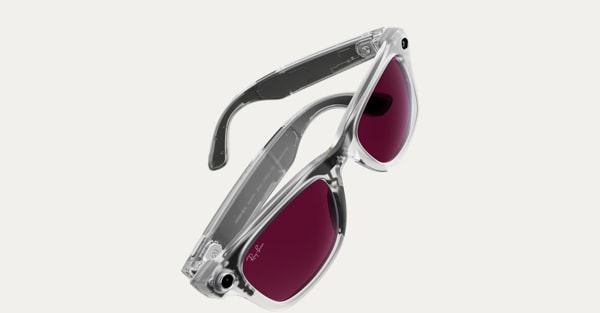
Meta Ray Ban as well as Google’s new smartglasses powered by Android XR, a new platform combining virtual reality, augmented reality and artificial intelligence, or Snaptchat’s Spectacles are not something new, but they got it right. And with chatbots they could really become an alternative to screens. Not small things remain to be fixed, such as battery life, the six hours of mixed use claimed by Meta is not bad, but for many scenarios it is not enough (e.g. prolonged use outside the home, travel etc.). Glasses with cameras, microphones and displays raise privacy issues about who records what when, with what awareness of people nearby. They may be heavy to wear for a long time. The visibility of the display in strong sunlight may also be a limitation. The perceived ‘social disconnect’ effect and possible consequences need to be considered and studied well. The price then – $799 – is judged high but will be lowered. Something, in short, will have to be limited, improved and perhaps adjusted. But this time Zuck’s flop could really be a new beginning.